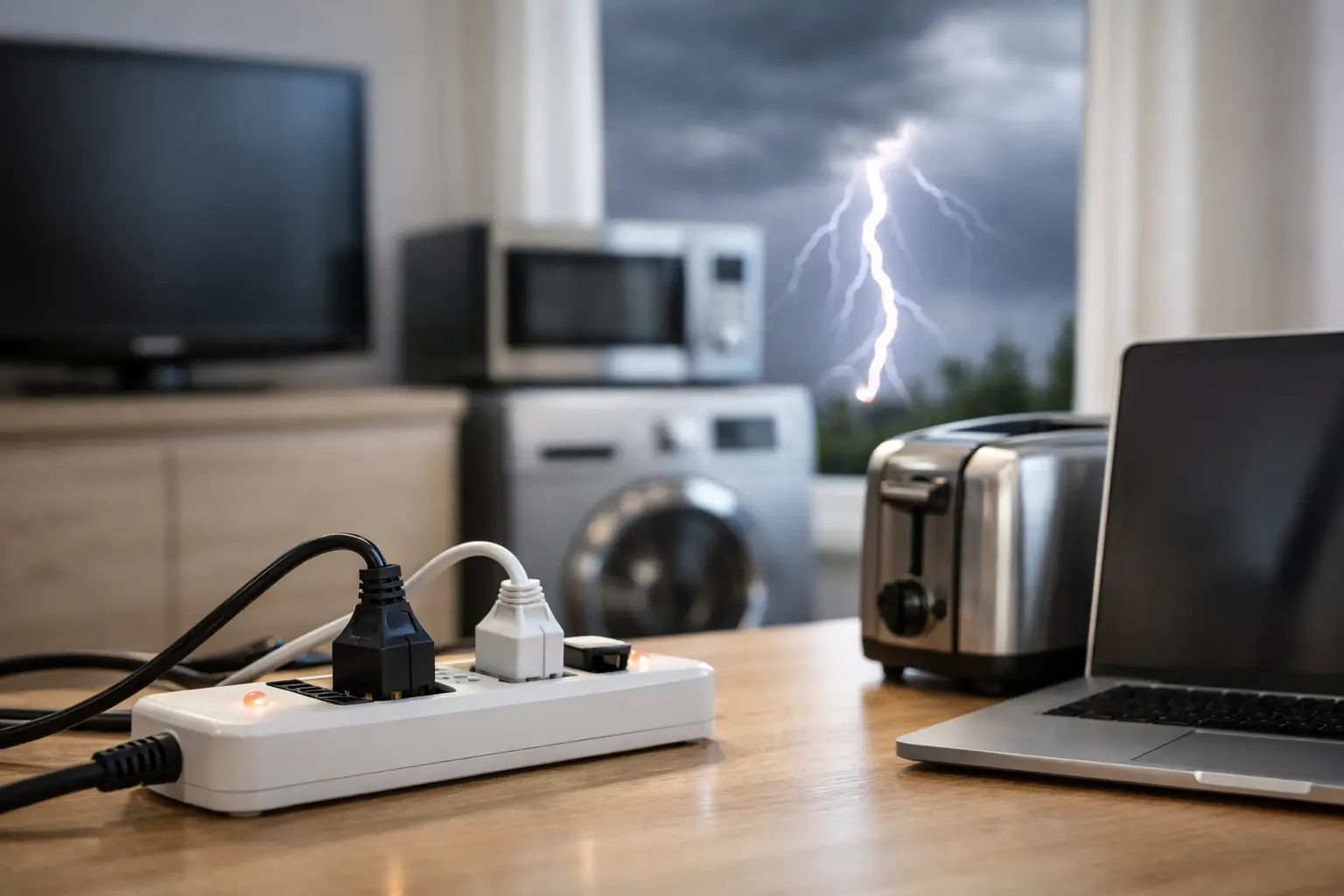
A lightning storm does not have to strike your house directly to damage a refrigerator control board, smart TV, HVAC equipment, or garage door opener. Utility switching, downed lines, transformer issues, and large appliances cycling on can all create voltage spikes inside a home. Knowing how to protect appliances from power surges helps Magnolia and Houston-area homeowners avoid costly, preventable repairs while improving the safety of their electrical system.
A surge protector is part of the answer, but it is not the entire strategy. The most effective protection uses layers: a properly grounded electrical system, a whole-home surge protective device at the panel, and point-of-use protection for sensitive electronics. The right combination depends on your home’s age, wiring condition, panel capacity, and the equipment you want to protect.
What a power surge can do to household appliances
Electricity is meant to enter your home at a steady voltage. A power surge is a brief increase above that normal level. It may last only a fraction of a second, but modern electronics use sensitive circuit boards that can be damaged by even a short spike.
Some damage is obvious. A television may not turn on after an outage, or a microwave display may go dark. More often, damage builds quietly over time. Repeated smaller surges can weaken components in refrigerators, washers, dishwashers, ovens, HVAC systems, internet equipment, and smart-home devices. An appliance may continue working for months before a board fails prematurely.
Texas weather adds another concern. Thunderstorms and lightning activity can send major voltage events through utility lines, cable lines, or other connected systems. However, lightning is not the only risk. Everyday internal surges caused by motors, compressors, and large loads can gradually affect other equipment on the same electrical system.
Start with the electrical panel
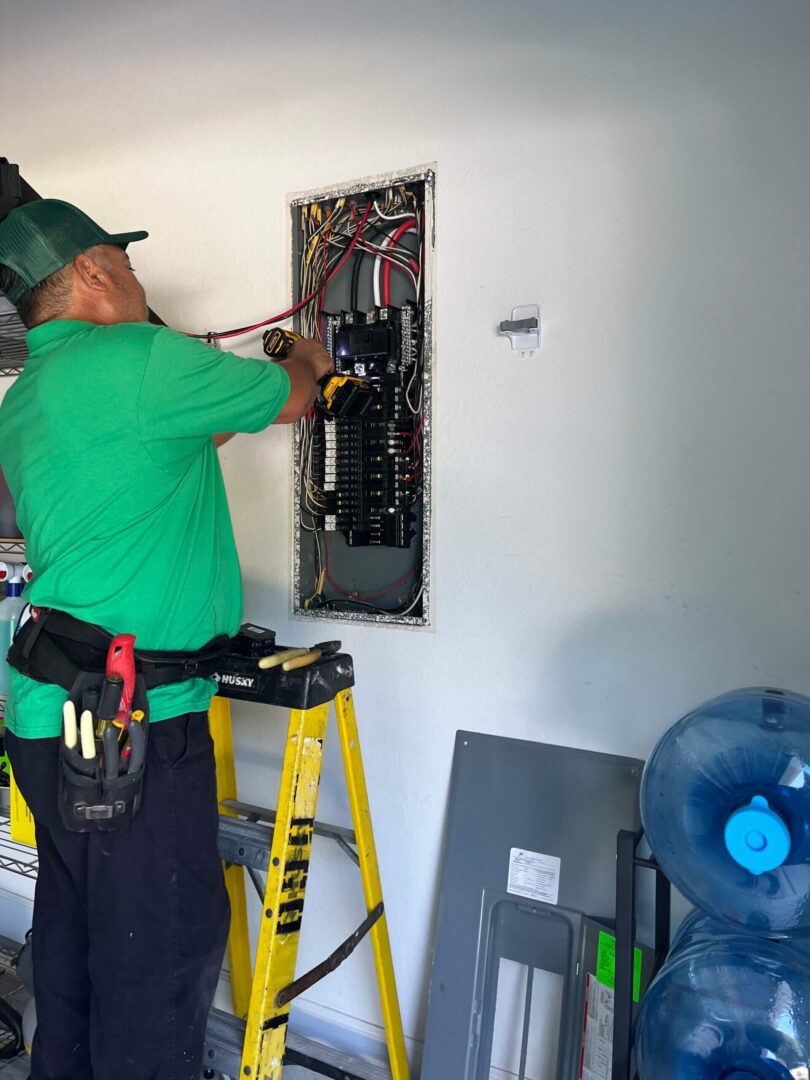
The electrical panel is the best place to address surges before they spread throughout the house. A whole-home surge protective device is installed at or near the main electrical panel by a licensed electrician. It is designed to divert excess voltage safely away from the circuits that power your home.
This type of protection is particularly valuable because it helps protect hardwired equipment that cannot plug into a standard power strip. That includes air conditioners, furnaces, well pumps, garage door openers, built-in kitchen appliances, ceiling fans, and many modern appliances with electronic controls.
Whole-home surge protection does not make a home immune to every electrical event. No device can guarantee protection from a direct lightning strike or compensate for unsafe wiring. Still, it provides a strong first line of defense against common surges entering through the electrical service.
A licensed electrician should inspect the panel before installation. Older panels, crowded breaker spaces, corrosion, improper grounding, or obsolete equipment may affect the type of surge protection that can be installed. If a panel upgrade is already needed for a generator, EV charger, addition, or larger HVAC system, adding surge protection during that work is often a practical decision.
Grounding matters as much as the device
Surge protection needs a proper grounding path to work as intended. If your grounding and bonding are incomplete, damaged, or outdated, excess energy may not have a safe route to dissipate.
This is one reason homeowners should avoid treating surge protection as a simple do-it-yourself panel project. Electrical panels carry serious shock and fire hazards, even when a main breaker is switched off. A licensed professional can verify grounding, inspect connections, and install equipment according to current electrical code requirements.
Use point-of-use protectors where they make sense
After whole-home protection is in place, use quality point-of-use surge protectors for electronics with delicate components. Computers, televisions, gaming systems, network equipment, sound systems, and smart-home hubs are common examples.
Look for a listed surge protective device, not just a basic power strip. A power strip provides additional outlets. A surge protector is built to limit voltage spikes. The packaging should clearly identify it as surge protection and provide performance information such as a joule rating and clamping voltage.
Higher ratings are not the only factor. Buy protectors from reputable manufacturers, avoid damaged units, and make sure the device fits the load you are connecting. Never plug one power strip or surge protector into another. That practice can overload outlets and creates a fire risk.
For large appliances, a standard plug-in strip is usually not the right solution. Refrigerators, freezers, washers, dryers, and window air conditioners may require dedicated circuits or specially rated protection. Ask an electrician what is appropriate for the appliance and the circuit serving it.
Protect connected lines, not only power cords
A surge can travel through more than your electrical service. Cable, phone, antenna, and network lines can also provide a path to connected equipment. If your television, modem, router, security system, or computer connects to outside wiring, consider protection designed for those lines as well.
This does not mean every device needs a collection of adapters. The goal is to identify valuable or critical equipment and make sure all connected systems are properly grounded and protected. For example, a home office with a desktop computer, modem, router, and monitor deserves more attention than a rarely used lamp.
Homeowners with security cameras, gate operators, irrigation controls, pool equipment, or outdoor entertainment systems should be especially careful. Outdoor and detached structures can be exposed to different surge paths and may need a professional assessment of grounding, circuit protection, and wiring condition.
Maintain appliances and circuits to reduce internal surges
Not all electrical problems begin outside the home. Motors and compressors can create smaller switching surges as they start and stop. Overloaded circuits, loose connections, deteriorated outlets, and failing appliances can also contribute to trouble.
Pay attention to warning signs. Lights that dim when the HVAC starts, breakers that trip repeatedly, buzzing outlets, burning odors, warm switches, or appliances that behave unpredictably deserve prompt attention. These issues are not normal inconveniences to ignore. They can point to a circuit problem that surge protectors alone will not solve.
Avoid overloading receptacles with extension cords and multi-outlet adapters. Use dedicated circuits where required, especially for major appliances and equipment with high electrical demand. If you are adding a second refrigerator, workshop tools, a hot tub, EV charger, or new HVAC equipment, have the circuit capacity evaluated first.
Know when to unplug and when to call an electrician
During a severe storm, unplugging sensitive electronics can add protection if it is safe and practical to do so. This is most useful for devices that are easy to disconnect, such as computers, televisions, or chargers. Do not attempt to unplug hardwired equipment, and never handle cords or electrical equipment near water or during an active emergency.
After a major outage or lightning event, check for damaged surge protectors. Many have indicator lights that show whether protection is still active. If the light indicates a fault, replace the device. Some surge protectors sacrifice themselves during a significant event, which is preferable to allowing the surge to reach your electronics.
Call a licensed electrician if you notice recurring power issues, panel damage, burning smells, flickering throughout the house, or repeated appliance failures. These symptoms can indicate loose service connections, overloaded circuits, grounding issues, or panel concerns. A proper diagnosis can prevent a more expensive repair later.
A practical surge-protection plan for Texas homes
For most homeowners, a sensible approach starts with an electrical inspection and whole-home surge protection at the panel. Then protect high-value electronics with quality point-of-use devices and address any grounding, panel, outlet, or circuit issues found during the evaluation.
Homes with older panels, recent appliance failures, generator systems, EV chargers, or extensive smart-home equipment may need a more tailored plan. The cheapest option is not always the best value if it leaves the HVAC system, kitchen appliances, or electrical service unprotected. Honest recommendations should reflect what your home actually needs, not a one-size-fits-all package.
Logo Electrical Services helps homeowners in Magnolia and surrounding Houston-area communities evaluate surge risks, upgrade electrical panels, and install code-compliant whole-home protection. A licensed inspection provides clear answers about your system and the most practical next step.
The best time to improve surge protection is before a storm, outage, or failing circuit forces the decision. A few well-chosen upgrades can help protect the appliances your household depends on every day and provide greater confidence whenever the weather turns.