A dark side yard, driveway, or back gate is more than an inconvenience. It can hide trip hazards, make it harder to see who is approaching, and leave valuable areas of your property without a clear line of sight. Knowing how to install outdoor security lighting starts with choosing the right locations and understanding when the electrical work calls for a licensed professional.
For many Magnolia and Houston-area homeowners, the fixture itself is straightforward. The wiring behind it, the condition of the existing circuit, and the need for weatherproof connections are where safety matters most. A properly installed security light should give you dependable visibility without glare, nuisance triggering, or electrical problems down the road.
Start With a Lighting Plan, Not the Fixture
Walk your property after dark before buying anything. Look for the places where someone could approach unnoticed, where family members walk from the driveway to the house, and where cameras need better nighttime visibility. Common priorities include front entries, garage doors, driveways, side gates, patios, pool equipment areas, and detached buildings.
Aim light toward the area you need to see, not toward a neighbor’s windows or the street. A motion-activated floodlight is often a practical choice for side yards and rear access points. A dusk-to-dawn fixture may make more sense over a garage, at a gate, or along a regularly used walkway. The best setup often uses both: steady, lower-level lighting for safe movement and motion lighting for targeted security coverage.
Height and direction make a major difference. Mounting a light too low can create glare and leave shadows behind people or objects. Mounting it too high can reduce useful illumination at ground level. For most residential floodlights, a mounting point roughly 8 to 10 feet above the ground provides a good balance, though the right height depends on the fixture’s beam pattern and the area being covered.
Choose Fixtures Rated for Outdoor Use
Outdoor security fixtures must be listed for wet locations and designed to handle rain, humidity, heat, and changing temperatures. In Southeast Texas, moisture is not an occasional concern. It is a constant consideration, especially around soffits, exterior walls, patios, and exposed junction boxes.
LED fixtures are the standard choice for most homes because they use less energy, last longer, and provide bright, clear light quickly. Pay attention to lumens rather than wattage. A small entry or walkway may only need modest output, while a wide driveway or large backyard may need a higher-lumen floodlight or more than one fixture.
Color temperature also affects how the light feels and performs. Around 3000K produces a warmer appearance that works well near entrances and living spaces. Around 4000K to 5000K appears whiter and can improve detail for cameras and security coverage. Brighter is not always better. Excessively harsh lighting can create glare, upset neighbors, and make it harder for your eyes to adjust beyond the illuminated area.
If you are selecting a motion sensor, choose one with adjustable sensitivity, timer settings, and detection range. This gives you a way to reduce false activations from passing cars, tree branches, pets, or wildlife.
Check the Electrical Source Before You Begin
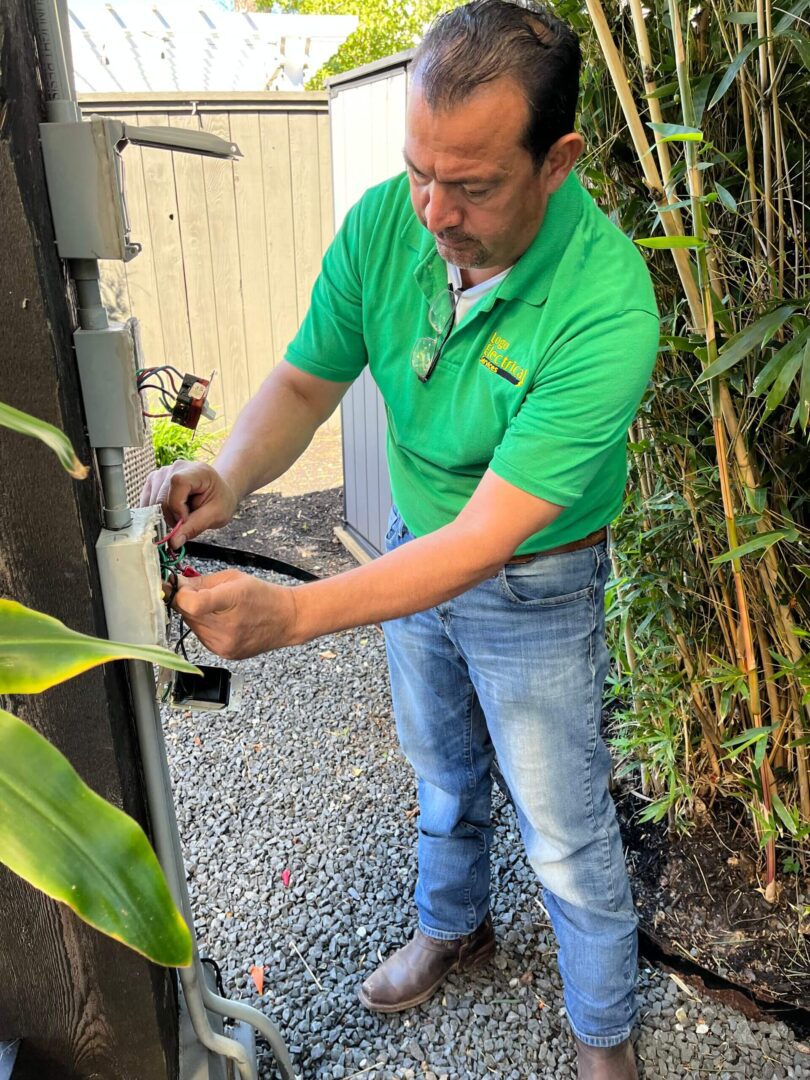
The safest installation begins by identifying where the fixture will get power. An existing exterior light, an outdoor-rated junction box, or a properly sized circuit may be suitable. But that depends on the wiring condition, circuit load, grounding, and whether the location can be made weatherproof.
Never assume an existing light box is ready for a heavier security fixture. Some older boxes are not rated to support the weight of a larger fixture, and older homes may have wiring issues that should be corrected before adding equipment. If the existing light flickers, trips a breaker, has no ground wire, or uses damaged insulation, stop and have it evaluated.
Exterior outlets and equipment are commonly protected by GFCI devices, and electrical work must follow current code requirements. The exact requirements can vary based on the installation, the home, and local inspection rules. A licensed electrician can determine whether a new circuit, GFCI protection, weather-resistant device, or upgraded box is needed.
Before touching any wiring, turn off the appropriate breaker and verify that the power is off with a properly rated voltage tester. Turning off a wall switch alone does not make the wiring safe. A switch can be miswired, and some boxes contain more than one circuit.
How to Install Outdoor Security Lighting at an Existing Box
If you have a sound, properly mounted exterior junction box and experience working safely with household wiring, installation generally follows the fixture manufacturer’s instructions. The details vary by product, but the process should include these essentials:
- Shut off the breaker and confirm the wires are de-energized with a voltage tester.
- Remove the old fixture and inspect the box, mounting hardware, and conductors for corrosion, loose connections, heat damage, or cracked insulation.
- Install the new fixture’s mounting bracket securely. The box and bracket must support the fixture without movement.
- Connect the grounding conductor first, then make the required hot, neutral, and fixture-wire connections using approved connectors.
- Tuck wires carefully into the box, attach the fixture, and seal the connection points as directed by the manufacturer.
- Restore power, test the light, and adjust the motion sensor, timer, and fixture angle after dark.
A weatherproof installation is more than adding caulk around the top edge of a fixture. The electrical box must be suitable for exterior use, connections need to remain protected from moisture, and the fixture gasket must sit correctly against the mounting surface. Caulking the bottom edge can trap water behind the fixture, so follow the manufacturer’s sealing guidance rather than applying sealant everywhere.
When a New Light Location Needs New Wiring
Adding a security light where no power exists is a more involved project. It may require running cable through an attic, wall cavity, soffit, crawl space, or underground conduit. Each route has different material and protection requirements, especially where wiring is exposed to weather or physical damage.
This is also where circuit capacity becomes important. A modern LED floodlight does not draw much power by itself, but the circuit may already serve garage outlets, refrigerators, freezers, tools, or other loads. Adding wiring without understanding the circuit can lead to tripped breakers or an installation that does not meet code.
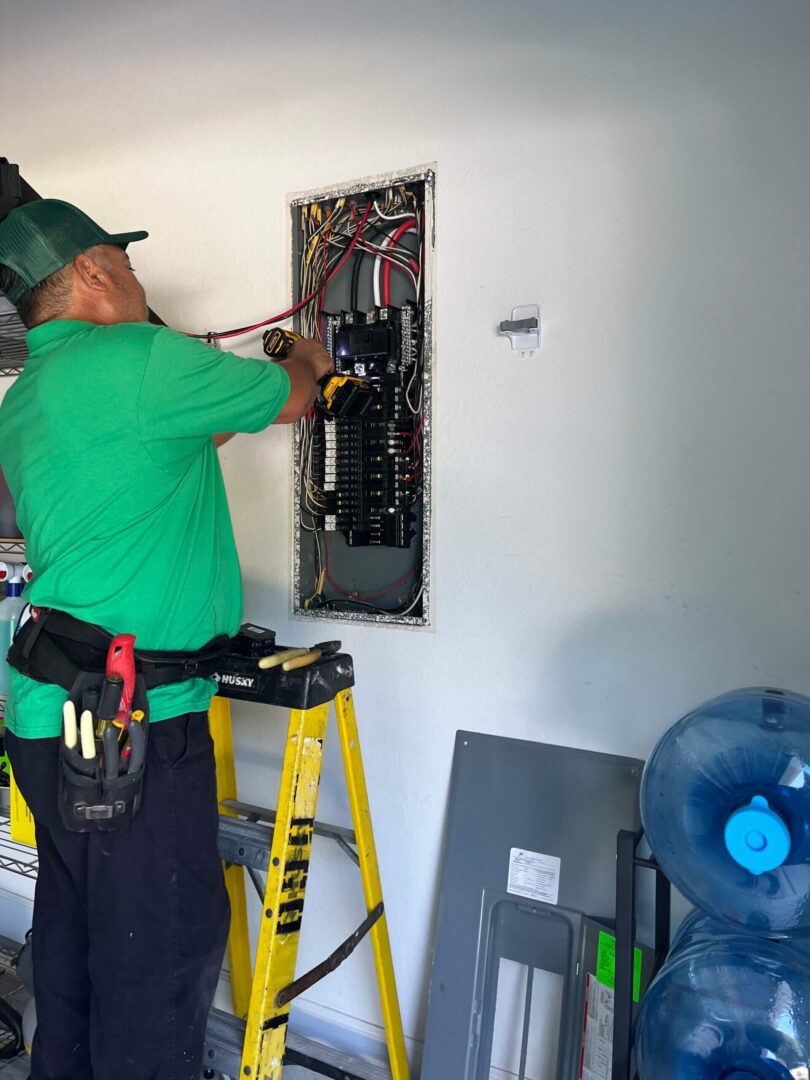
In some homes, the cleanest solution is to run a new dedicated circuit from the electrical panel. In others, an existing lighting circuit can safely support the addition. It depends on the panel capacity, the wiring path, the existing load, and the condition of the electrical system. There is no one-size-fits-all answer, particularly in older homes that may have prior additions or undocumented electrical work.
A licensed electrician can also install switched control, photocells, smart controls, or multiple fixtures that work together. These options can make security lighting more useful without leaving every floodlight on all night.
Test the System for Real-World Performance
Do not consider the job finished when the light turns on. Test it from the places people actually approach your home. Walk up the driveway, use the side gate, and move through the backyard at night. Check whether the sensor activates early enough and whether the light exposes the intended area without shining into bedrooms or neighboring properties.
Adjust the sensor sensitivity before changing the fixture location. Many false triggers can be corrected by narrowing the sensor’s field of view, lowering sensitivity, or shortening the time the light stays on. If the fixture is mounted near HVAC equipment, trees, reflective surfaces, or a busy street, fine-tuning may take a few evenings.
Also test the controls during different weather conditions. Heavy rain, summer heat, and humidity can reveal weak seals, loose covers, or a sensor that needs adjustment. If you notice flickering, buzzing, breaker trips, water inside the fixture, or a warm electrical box, turn the circuit off and schedule service.
When to Call a Licensed Electrician
Homeowners can often handle simple fixture replacement when a suitable exterior box and safe wiring are already in place. A professional should handle new wiring runs, panel work, damaged wiring, circuit issues, underground installations, or any situation where you are unsure what the wires in the box do.
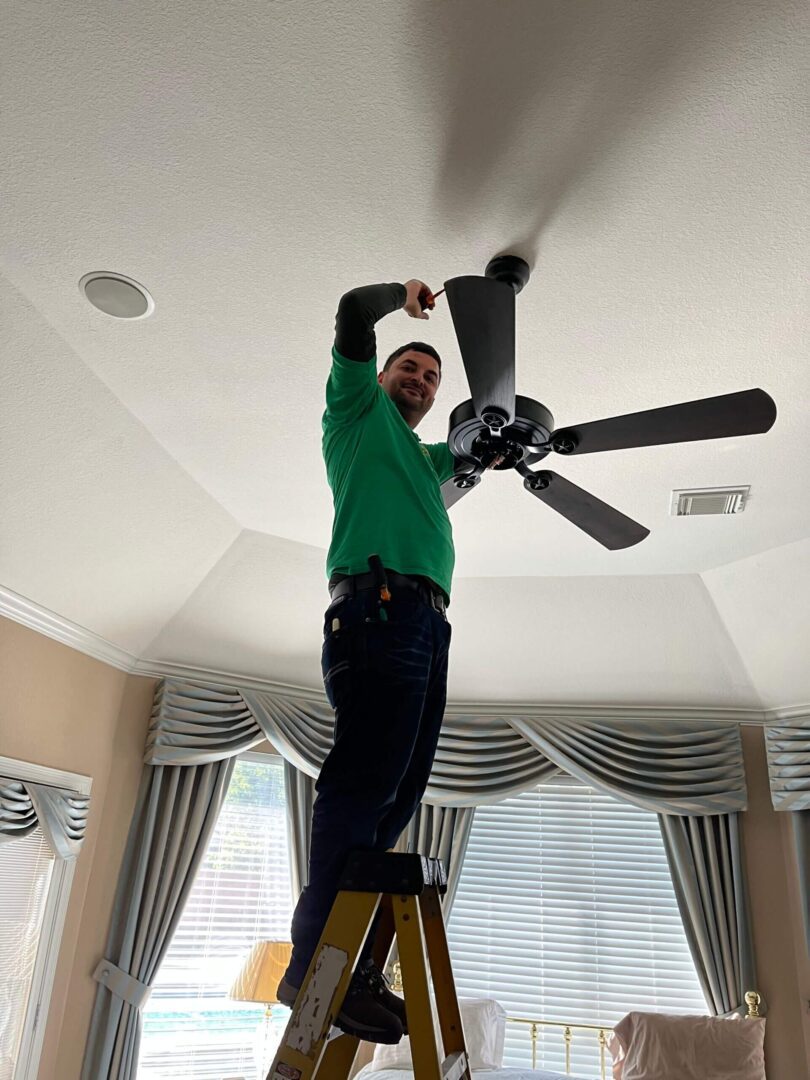
At Logo Electrical Services, our licensed team helps homeowners install security lighting that is placed thoughtfully, wired correctly, and built for the weather conditions Texas homes face. Honest recommendations start with the existing electrical system, not with a one-size-fits-all fixture.
The right outdoor security lighting should make your home feel easier to use after dark, not add another electrical concern to your list. If the installation involves more than a straightforward replacement, having it completed correctly the first time protects your home, your family, and your investment.