Buying the charger is usually the easy part. What catches many homeowners off guard is everything around it – panel capacity, garage layout, permits, and whether the spot you had in mind actually makes sense for daily use. If you are wondering how to prepare for EV charger installation, a little planning up front can save time, avoid change orders, and help you get a safer setup that works well for years.
For most homes, EV charger installation is straightforward when the electrical system is in good shape. But not every house is starting from the same place. A newer home with extra panel space may only need a dedicated circuit and the right charger location. An older home may need a panel upgrade, load calculation, or repairs before a charger can be installed properly. That is why preparation matters.
Start with your driving habits, not just the charger
Before choosing equipment, think about how you actually use your vehicle. A homeowner who drives locally around Magnolia and charges overnight may do just fine with a standard Level 2 charger set to a moderate amperage. Someone with a long daily commute, multiple EVs, or limited charging windows may need a different setup.
This matters because charger size affects the circuit requirement, installation cost, and sometimes whether your current service can support it. Bigger is not always better. In many homes, the right charger is the one that reliably meets your daily charging needs without forcing unnecessary electrical upgrades.
It also helps to think ahead. If you have one EV now but expect a second in the next few years, say so early. Planning for future capacity can be more cost-effective than reworking the installation later.
Check where the charger should go
One of the most practical parts of how to prepare for EV charger installation is choosing the right location. Homeowners often focus on where the car is parked today, but the better question is where charging will be easiest and safest over time.
A garage is common because it offers protection from weather and usually keeps the charger closer to the main electrical equipment. But some households prefer an exterior wall near the driveway. Either option can work if the charger is rated for the environment and installed to code.
Think about cable reach, parking habits, and door clearance. You do not want a charging cord stretched across a walkway or positioned so tightly that using it becomes frustrating. If two vehicles share the space, placement becomes even more important. A few feet in one direction can make a big difference in convenience.
Indoor vs. outdoor placement
Indoor installation may reduce exposure to heat, rain, and direct sun. Outdoor installation may be more practical if the garage is full, detached, or rarely used for parking. The trade-off often comes down to access and installation complexity. Outdoor mounting may require more weatherproofing and a longer electrical run, while indoor placement may be cleaner but less useful if the vehicle usually stays outside.
Look at your electrical panel before installation day
If there is one area homeowners should not guess on, it is panel capacity. Your EV charger will typically need a dedicated 240-volt circuit, and that circuit has to fit within the home’s available electrical load.
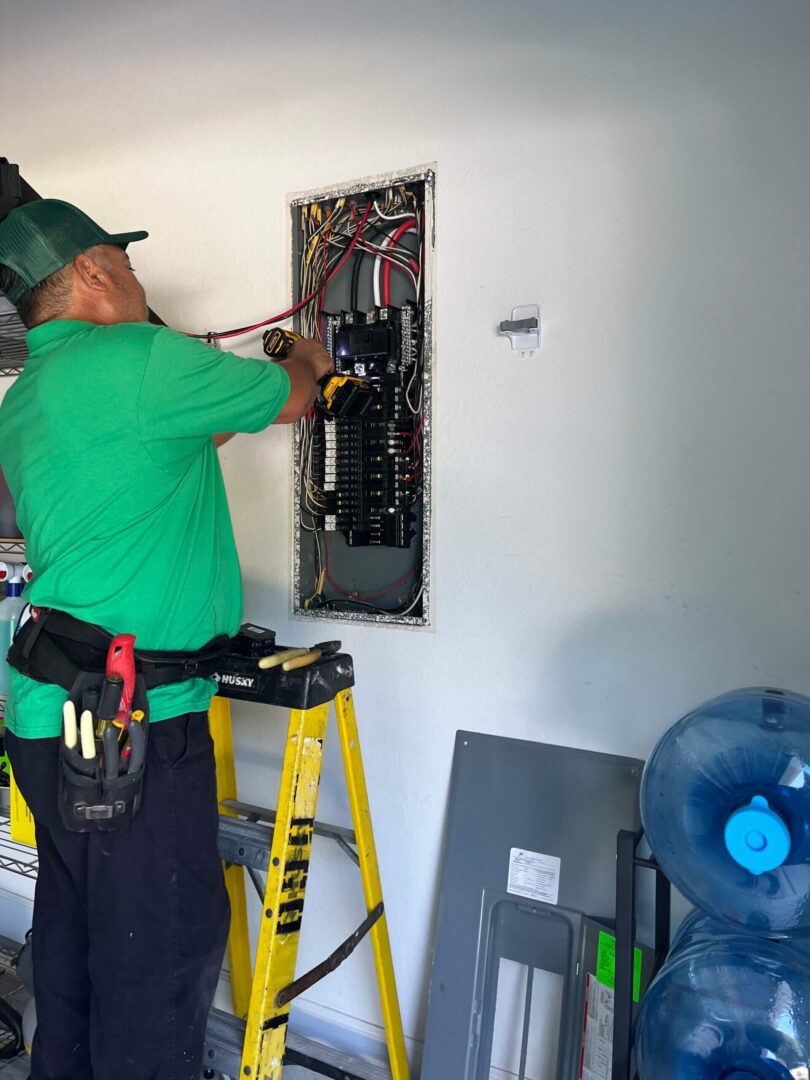
Some panels have open breaker space but still do not have enough capacity for an added charger. Others appear full, yet can be evaluated for safe solutions depending on the overall load and equipment condition. This is where a licensed electrician becomes important. A proper assessment is about more than finding an empty spot.
Older homes in particular may have limitations that affect charger installation. The panel may be undersized, outdated, damaged, or already carrying heavy loads from HVAC equipment, electric water heaters, ovens, or workshop circuits. In those cases, installing the charger may require a panel upgrade or other electrical improvements.
Signs your panel may need attention
You do not need to diagnose the system yourself, but it helps to notice red flags. Flickering lights, warm breakers, frequent tripping, rust, double-tapped breakers, or a panel that is already crowded can all point to the need for a closer look. If your home has had additions or major appliance upgrades over the years, the original service may no longer match the way the house is being used.
This is also a good time to ask whether whole-home surge protection makes sense. With a valuable vehicle and charging equipment tied into your system, many homeowners prefer the added protection.
Understand the difference between plug-in and hardwired
As you prepare, your electrician may ask whether you want a plug-in charger or a hardwired unit. Both can be good options, but they are not interchangeable in every situation.
A plug-in charger uses a 240-volt receptacle and can be easier to replace later. A hardwired charger is permanently connected and often preferred for a cleaner look, fewer connection points, and in some cases higher amperage. Local code requirements, manufacturer instructions, and your home’s layout all play a role in what makes the most sense.
For many homeowners, the best choice comes down to reliability, intended usage, and future flexibility. If you are not sure, that is normal. It is better to ask before the work begins than to change direction midway through the job.
Be ready for permits and code requirements
Homeowners sometimes assume EV charger installation is similar to plugging in an appliance. It is not. In most cases, this work should be permitted and performed to current electrical code.
Permits help protect you. They support proper load evaluation, circuit sizing, grounding, breaker selection, and installation methods. They also matter when you sell your home or file an insurance claim after electrical damage. Skipping this step may seem faster, but it can create expensive problems later.
A licensed electrical contractor should be able to explain what is required in your area and handle the process properly. That is especially valuable if your installation involves service upgrades, detached structures, trenching, or other more involved work.
Clear the work area and plan for access
A smooth installation usually starts with a simple question: can the electrician get to everything they need? If the panel is behind storage, if the garage wall is packed with shelving, or if the driveway gate is locked, the job can slow down quickly.
Before installation day, clear access to the electrical panel, the proposed charger location, and any attic, crawlspace, or side-yard areas that may be needed for wiring. If pets need to be secured or vehicles moved, plan that in advance. These small steps help the work move faster and reduce surprises once the crew arrives.
If your charger will be installed in a finished garage, ask whether conduit will be surface-mounted or concealed where possible. Every home is different, and the cleanest option may depend on wall construction, attic access, and budget.
Think about the full cost, not just the unit price
One common mistake is budgeting for the charger but not for the installation conditions. The equipment itself may be only part of the total project cost. Factors like panel upgrades, long wire runs, permit fees, trenching, drywall repair, or relocating existing circuits can affect the final price.
That does not mean the project is out of reach. It means honest planning matters. Clear pricing from the beginning helps homeowners make informed decisions and avoid frustration. In many cases, the most cost-effective path is not the cheapest quote but the one that accounts for the home’s actual electrical needs and completes the work safely the first time.
How to prepare for EV charger installation with fewer surprises
The best preparation is a combination of practical planning and a professional site evaluation. Know where you want to charge, how fast you really need to charge, and whether your electrical system has been keeping up with the rest of your home. Have your vehicle model, charger preference, and daily usage in mind before the estimate.
It also helps to gather any useful details ahead of time, such as the age of the panel, whether the home has a garage or detached structure, and any past electrical issues. Photos can sometimes help with the first conversation, but they do not replace an on-site assessment.
For homeowners who want the job done safely, cleanly, and to code, this is not a project to rush or guess through. A trusted local contractor with residential experience can spot issues early, explain your options clearly, and recommend a setup that fits both your home and your routine. That is the kind of planning that gives you confidence every time you plug in.
If you are getting ready to add home charging, treat the installation like any other major electrical upgrade – with good information, realistic expectations, and a licensed electrician who will do the work right.