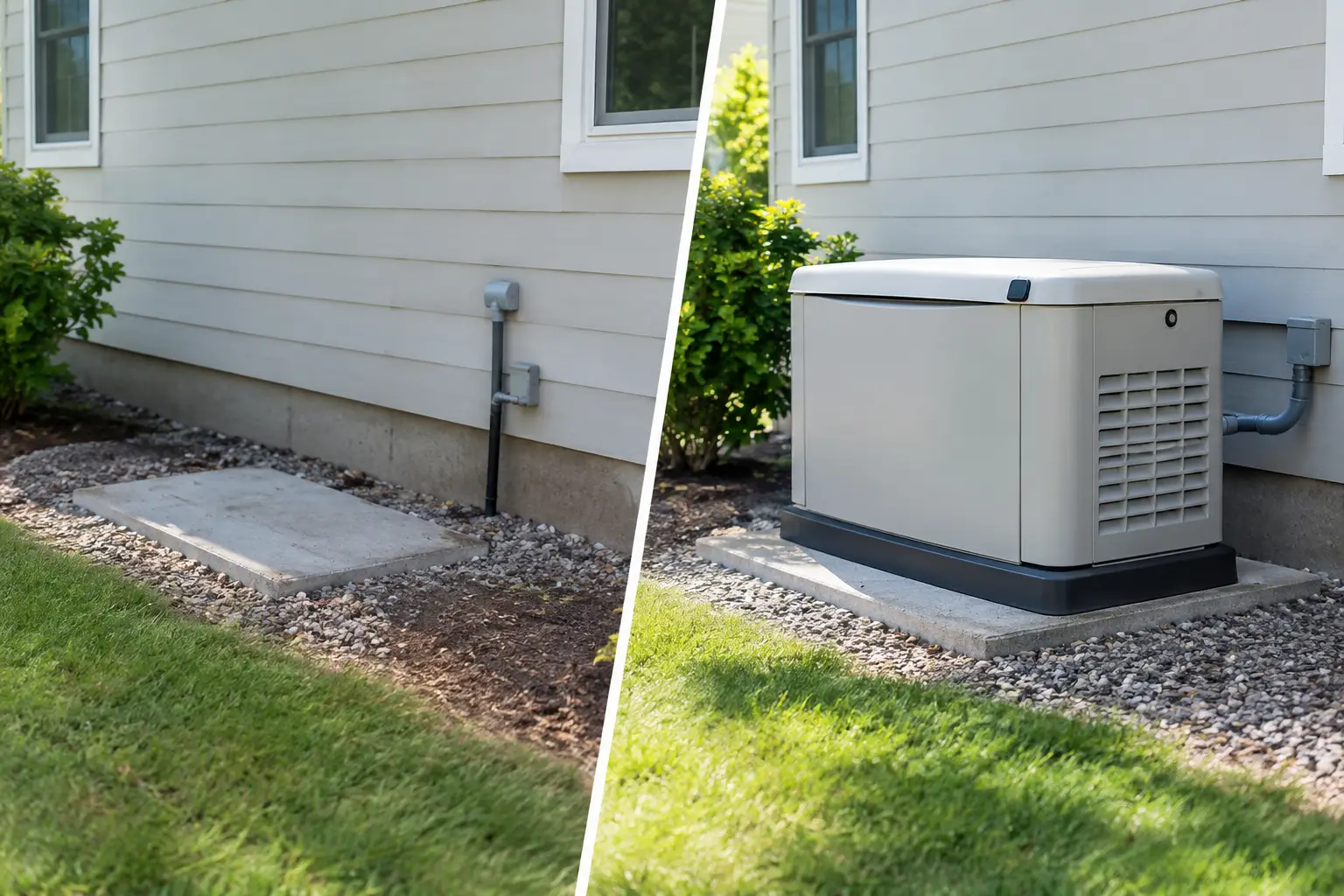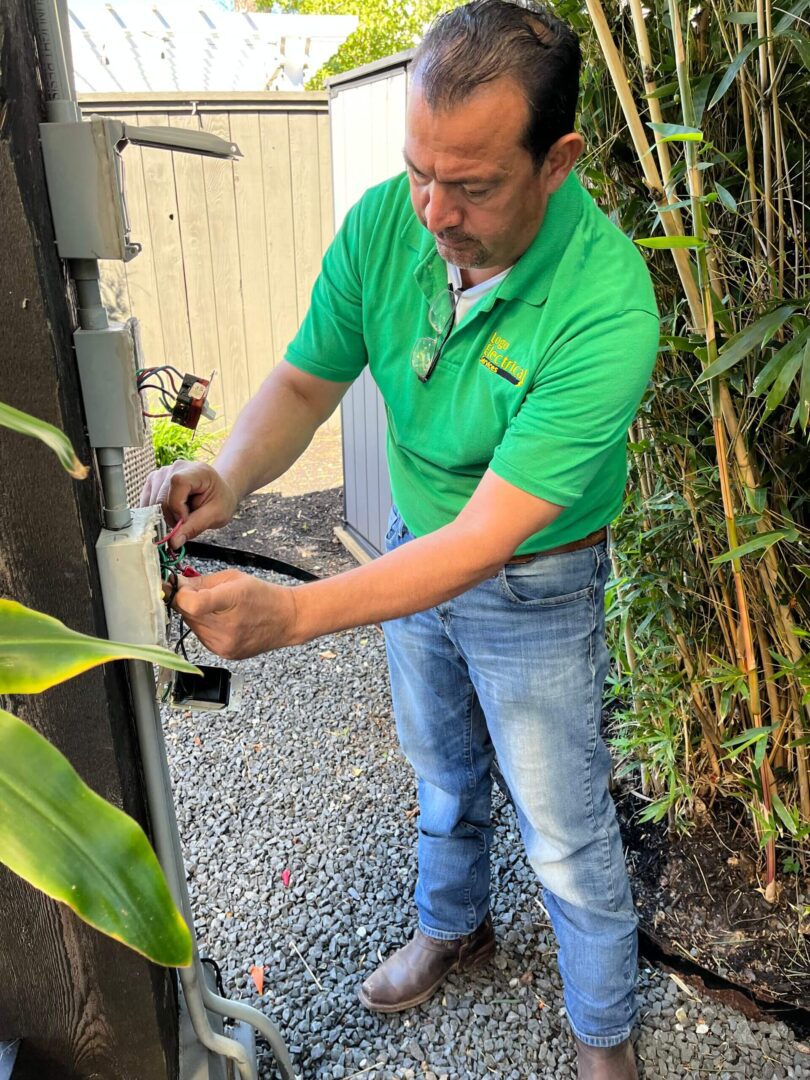
A generator installation before after example is more than a picture of a new unit sitting beside a home. The meaningful change happens in the electrical system: which circuits receive power, how the generator is disconnected from utility lines, whether the service equipment can support the design, and how the equipment performs when the power actually goes out. For Magnolia and Houston-area homeowners, those details determine whether backup power is a real solution or an expensive piece of equipment that cannot do the job safely.
A Realistic Generator Installation Before and After Example
Consider a typical family home with an attached garage, central air conditioning, an electric range, a well-used kitchen, and a home office. The homeowners have experienced several outages during severe weather. Their portable generator can keep a refrigerator running, but it requires extension cords, fuel storage, and someone to set it up outside in difficult conditions. They want a permanently installed standby generator that starts automatically and protects the essentials while they are home or away.
Before: A Home With Limited Backup Options
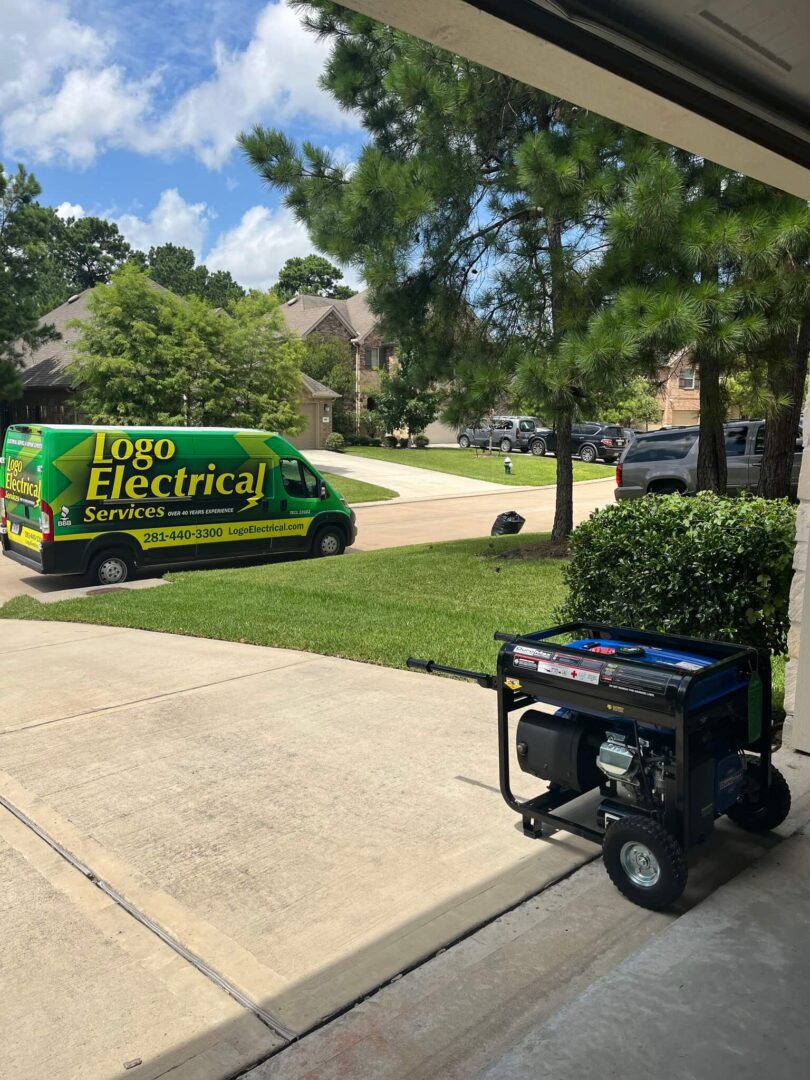
Before installation, the home’s electrical panel is supplied only by utility power. When the utility fails, every circuit goes dark. The portable generator cannot be connected directly to the home wiring without the proper equipment, and running extension cords through doors or windows creates trip hazards and can leave critical systems unprotected.
An electrician’s first visit should look beyond the generator location. The load calculation matters. A homeowner may want air conditioning, refrigerators, lights, internet equipment, garage doors, medical devices, a sump pump, and selected kitchen circuits to operate during an outage. Whether all of those loads can run together depends on the generator’s capacity and the home’s electrical demand.
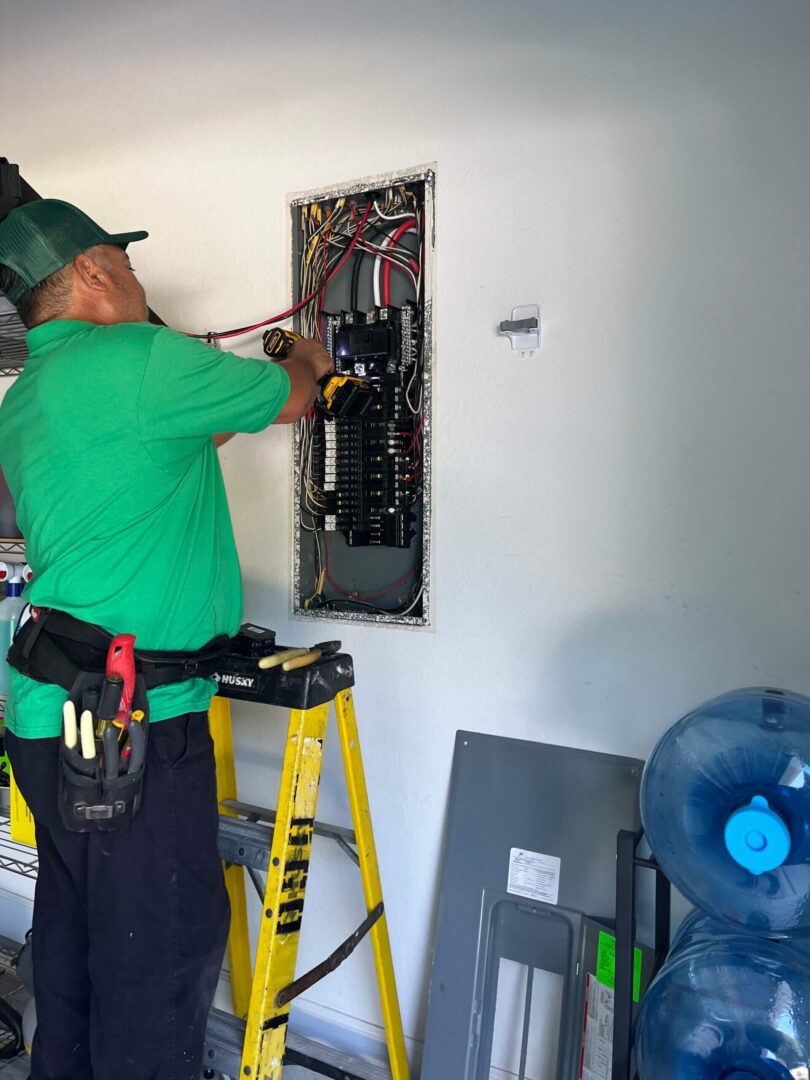
The service panel also deserves a close inspection. Older panels, crowded breaker spaces, damaged components, or insufficient service capacity can change the scope of work. Sometimes a panel upgrade or electrical repairs should be completed first. That is not unnecessary add-on work. It is part of making sure the backup system is safe, code-compliant, and dependable for years to come.
During Installation: More Than Placing a Generator
After the design is approved, the generator is installed on a properly prepared outdoor location with required clearances from doors, windows, vents, and combustible materials. Placement affects safety, noise, service access, and the path for electrical and fuel connections. A qualified installer will not simply select the closest spot to the panel if that location fails clearance requirements or creates future maintenance problems.
The electrical work typically includes a transfer switch or automatic transfer equipment. This component is central to the installation. It isolates the home from the utility during an outage and prevents generator power from feeding back onto utility lines. Backfeeding is dangerous to utility workers, can damage equipment, and is not an acceptable substitute for a professionally installed transfer system.
The installer then connects the generator to the home’s electrical distribution equipment, configures the selected circuits or whole-home load management system, and completes required grounding and bonding. Fuel work, permits, and inspections may involve separate requirements depending on whether the generator uses natural gas or propane and on the local authority having jurisdiction. A reliable contractor explains those requirements before work begins rather than treating them as a surprise after the equipment arrives.
After: Automatic, Managed Backup Power
After installation, the home has a defined backup-power plan. When utility power fails, the generator detects the outage, starts, and transfers approved loads to generator power automatically. The homeowner does not need to carry a generator through rain, manage a nest of extension cords, or choose between the refrigerator and the internet connection in the middle of an outage.
The final result may look simple from the driveway: a permanent generator, a clean electrical connection, and clearly labeled equipment. Behind that result is careful circuit planning. In one home, the backup system may operate the entire house with managed large loads. In another, the practical and cost-effective option is to power essential circuits only, such as refrigeration, lighting, selected receptacles, security equipment, internet, and a few comfort systems.
Neither approach is automatically better. Whole-home coverage offers greater convenience, but it can require a larger generator, more fuel capacity, electrical upgrades, and a higher initial investment. An essential-load system costs less and can provide excellent protection, but homeowners need to understand in advance what will and will not operate during an extended outage.
What a Good Before-and-After Project Should Show
Photos are useful, but they do not tell the whole story. When comparing generator installation examples, look for evidence that the contractor considered the entire electrical system. Equipment should be securely mounted, accessible for service, and installed with appropriate clearances. Conduit and wiring should be neat and protected. The transfer equipment and breakers should be labeled so a homeowner and future service technician can identify the backup arrangement.
Just as important, the contractor should be able to explain the work in plain language. You should know whether your generator supports the whole home or only selected circuits, how it will transfer during an outage, what routine maintenance it needs, and how to test it safely. You should also receive clear information about permit and inspection requirements, warranty coverage, and any electrical upgrades included in the quoted scope.
Price alone is not a reliable way to compare proposals. One estimate may cover only equipment placement and a basic connection, while another accounts for load calculations, transfer equipment, panel modifications, trenching, surge protection, permits, and startup testing. Honest pricing means the scope is specific enough for you to understand what you are receiving and why it is needed.
Testing Is the Final Part of Installation
A generator should not be considered complete when the wiring is connected. It needs to be commissioned and tested. The technician should verify that the unit starts correctly, the transfer equipment operates as intended, selected loads receive power, and the system returns to utility power properly when service is restored.
Testing also gives homeowners a practical orientation. You should know where the generator and electrical disconnects are located, what status lights or alerts mean, and who to contact if the system reports a problem. Standby generators are designed to exercise regularly, but they still need maintenance according to the manufacturer’s schedule. Oil, filters, batteries, fuel supply, and error codes all deserve attention before storm season rather than during an emergency.
Whole-home surge protection is also worth discussing as part of a generator project. Outages and restoration events can be hard on sensitive electronics. While a surge protector cannot prevent every possible electrical issue, it adds another layer of protection for appliances and electronics connected to the home’s electrical system.
Questions to Ask Before You Approve the Work
Start by asking what the generator is sized to run and whether that answer is based on a proper load calculation. Ask whether your existing panel and service equipment are suitable, what transfer equipment will be installed, and whether any circuits will be excluded. If air conditioning is a priority, confirm exactly which units can operate and whether load management is part of the plan.
You should also ask who is responsible for permits, inspections, electrical work, fuel coordination, startup, and warranty registration. Clear answers help prevent gaps between trades. A licensed electrical contractor should be comfortable walking you through the plan before installation begins, including any conditions that could affect cost or timing.
For homeowners in Magnolia and the greater Houston area, Logo Electrical Services approaches generator work as an electrical safety project first and a convenience upgrade second. That means evaluating the panel, circuits, transfer method, and backup priorities before recommending a system.
The best after photo is not just a generator beside the house. It is the confidence that, when the lights go out, your home has a safe, tested plan to keep the things that matter most running.