A utility line running from the street to your home may not get much attention until it starts sagging, a storm takes down a limb, or you are planning a major renovation. The choice between overhead service vs underground wiring affects more than curb appeal. It can influence upfront cost, storm exposure, repair access, and the long-term electrical plans for your Magnolia-area home.
There is no single best option for every property. A well-installed overhead service is safe, practical, and often the most cost-effective choice. Underground service can offer a cleaner appearance and fewer weather-related interruptions, but it requires more planning and a larger initial investment. The right answer depends on your lot, your utility provider, your existing electrical equipment, and what you want from the property over time.
Overhead Service vs Underground Wiring: The Main Difference
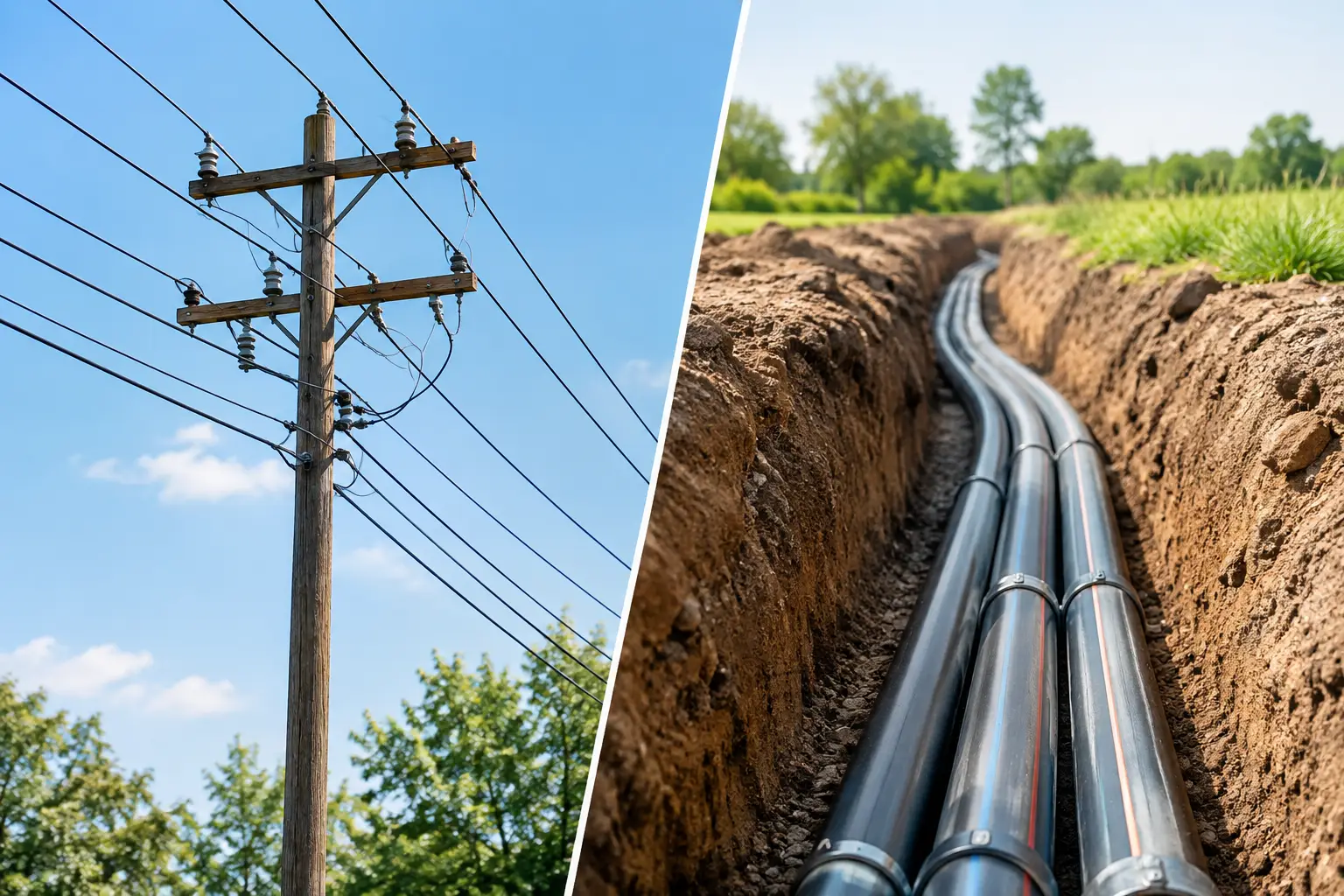
An overhead electrical service brings power from the utility pole to a weatherhead and service mast on your home, then into the meter and main electrical panel. You can see the service drop above ground, which makes its route and condition relatively easy to inspect.
Underground service routes the utility connection through buried conduit and conductors. Depending on the neighborhood and utility setup, the connection may come from a pad-mounted transformer, an underground utility pedestal, or another underground distribution point. The visible service drop is eliminated, but the system below ground still needs proper depth, conduit, protection, and coordination with the utility company.
Both systems can serve a home reliably when they are designed correctly and installed to current code and utility requirements. The choice is less about whether one is safe and more about which set of trade-offs fits your home.
Cost: Why Underground Work Usually Starts Higher
For most existing homes, overhead service is less expensive to install or replace. The work is more direct: the electrician can install or update the mast, weatherhead, meter equipment, service entrance conductors, and panel connection without extensive excavation.
Underground wiring often involves trenching, conduit installation, conductor pulls, restoration of landscaping or hardscape, and inspections at multiple stages. If a driveway, patio, mature landscaping, drainage system, sprinkler lines, or other buried utilities are in the path, costs can rise quickly. The utility company may also have separate charges or requirements for its part of the conversion.
That does not mean underground service is a poor value. For a new home, a major addition, or a property where the utility infrastructure is already underground, it may make perfect sense. It can also be a worthwhile investment when appearance is a high priority or when an overhead route creates repeated conflicts with trees.
Homeowners should be cautious about price comparisons that only look at the electrician’s work. A clear project estimate should identify what is included, what requires utility coordination, and whether site restoration is part of the scope. Honest pricing starts with understanding the full job, not just the visible equipment.
Storms, Trees, and Reliability in Southeast Texas
The Houston area sees strong thunderstorms, wind events, heavy rain, and fast-growing tree cover. Those conditions matter when choosing a service route. Overhead lines are more exposed to falling limbs, wind-driven debris, and accidental contact during roof work or tree trimming. A properly maintained overhead service can perform well for many years, but it needs adequate clearance and periodic attention.
Underground service removes the service conductors from most tree-related risks. That can reduce outages caused by branches near the connection to your home. It does not make your home immune to outages, however. If the larger utility distribution system is damaged, an underground service line alone cannot keep the power on. For homeowners who need backup power during outages, generator planning is often more important than the service route itself.
Water is another consideration. Properly rated underground materials and correctly installed conduit are designed for below-grade use, but poor installation can create long-term problems. Conduit damage, settling soil, moisture intrusion at equipment, or unmarked digging can affect buried systems. The answer is not to avoid underground wiring. It is to make sure the work is planned, permitted, and completed by a licensed professional.
Appearance and Property Use
For many homeowners, the visual difference is the most immediate reason to consider underground service. Removing an overhead service drop can improve sightlines, especially on a newer home, a remodeled front elevation, or a property with a carefully designed landscape.
Underground wiring can also make some projects easier to plan around. If you are adding a detached garage, workshop, pool equipment, landscape lighting, gate system, or EV charger, underground feeders may offer a cleaner route than overhead conductors. Each project still needs to account for load calculations, conduit sizing, burial depth, utility markings, and required clearances.
On the other hand, an overhead service may be the more sensible choice for a home with limited access, extensive concrete, or a straightforward existing route. There is no benefit in burying a service simply because it looks newer if doing so creates unnecessary disruption or stretches the project budget beyond what the home needs.
Repairs and Future Access
Overhead equipment is generally easier to inspect and diagnose. If a service mast is damaged or conductors are visibly compromised, the problem is often apparent. Repairs may still require a utility disconnect and permit, but access to the system is more straightforward.
Underground systems are protected from many external hazards, yet locating a fault can be more involved. An electrician may need specialized testing to identify the issue, and repairs can require excavation. That is why quality materials, properly installed conduit, accurate records, and careful planning matter so much from the beginning.
Before making either choice, consider your future electrical plans. A service upgrade for a larger panel, whole-home surge protection, generator inlet equipment, or high-capacity EV charging may affect conductor sizing and service equipment. Planning those upgrades together can prevent rework later.
When Overhead Service Is Usually the Better Fit
Overhead service is often the practical option when the existing setup is in good condition, the utility connection is already overhead, and the homeowner wants to control project costs. It can also be preferable when access for trenching is difficult or when underground work would disturb major landscaping, drainage, or concrete.
It is a solid choice for homeowners who need to replace aging service equipment, repair storm damage, or upgrade a panel without turning the project into a full property excavation. The key is ensuring the mast, attachment point, clearances, grounding, meter equipment, and panel connection meet current requirements.
When Underground Wiring May Be Worth It
Underground service is often worth considering during new construction, a major renovation, or a planned conversion in a neighborhood with underground utility infrastructure. It may also be a good fit when overhead lines repeatedly conflict with trees or when a homeowner wants a cleaner exterior appearance and is prepared for the added expense.
Before approving an underground conversion, a qualified electrician should evaluate several practical details:
- The utility company’s requirements and point of connection
- The route, trench depth, conduit type, and property access
- Existing buried utilities, irrigation lines, drainage, and hardscape
- The capacity needed for current loads and future upgrades
This evaluation helps avoid a common mistake: treating an underground conversion as a simple wire replacement. It is a coordinated service project that may involve the utility provider, local permits, inspection requirements, and upgrades to your meter base or electrical panel.
Do Not Treat Service Work as a DIY Project
The electrical service is the point where utility power enters your home. Work at this level carries serious shock, fire, and code-compliance risks. Even if the visible issue looks minor, such as a leaning mast or a loose-looking line, the repair may involve utility-owned equipment and energized conductors.
A licensed electrician can determine whether the problem is on the utility side or the homeowner’s side, explain the repair path, and coordinate the necessary steps. That clarity is especially valuable after storm damage, when quick decisions can lead to unsafe shortcuts.
For Magnolia and surrounding Houston-area homeowners, Logo Electrical Services can assess your existing service, explain overhead and underground options in plain language, and provide a clear recommendation based on your property and electrical goals. The best choice is the one that keeps your home safe today while making room for the upgrades you may need tomorrow.