A GFCI outlet that will not reset can turn a simple morning routine into a frustrating problem – especially when it controls the bathroom, kitchen, garage, patio, or pool equipment. Knowing how to reset GFCI outlet protection correctly can restore power in some cases, but a repeated trip is a safety warning, not an inconvenience to work around.
Ground-fault circuit interrupter, or GFCI, protection is designed to shut off electricity quickly when it detects current flowing where it should not. That response can help prevent electrical shock. The right approach is to reset it once, check for an obvious cause, and call a licensed electrician if it continues to trip or will not reset.
What a GFCI Outlet Does
A GFCI outlet compares the electricity leaving the outlet with the electricity returning to it. If it detects even a small difference, it can trip and cut power in a fraction of a second. This is particularly valuable in locations where moisture, water, concrete floors, or grounded surfaces raise the risk of shock.
You will commonly find GFCI outlets in bathrooms, kitchens, laundry rooms, garages, unfinished spaces, outdoor areas, and near wet bars or pools. In many homes, one GFCI outlet also protects other regular outlets farther down the same circuit. That means a dead outlet in the garage or on an exterior wall may be caused by a tripped GFCI somewhere else entirely.
Modern homes may use a GFCI circuit breaker in the electrical panel instead of, or in addition to, a GFCI receptacle. The troubleshooting process is similar, but panel work requires extra caution.
How to Reset a GFCI Outlet
Before touching the outlet, make sure your hands and the area around the receptacle are dry. Do not reset an outlet that is wet, cracked, warm to the touch, discolored, loose in the wall, or making a buzzing sound. Those conditions call for professional service.
Start by unplugging everything connected to the GFCI outlet and any nearby outlets that may be on the same circuit. Appliances such as coffee makers, hair dryers, power tools, freezers, outdoor lighting, chargers, and pumps can cause a trip when they develop a fault or encounter moisture.
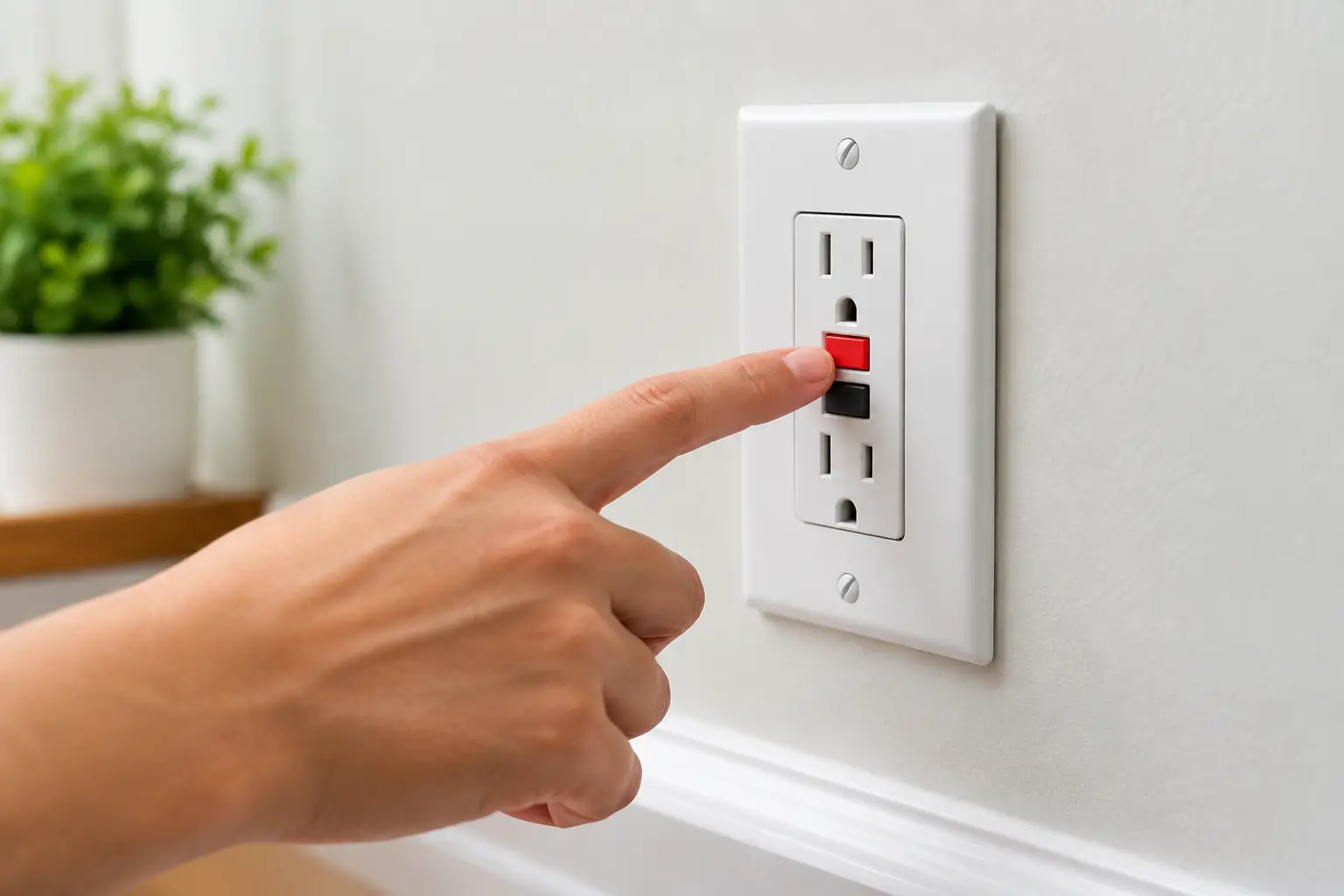
Next, locate the two buttons on the face of the outlet. One is labeled TEST and the other RESET. Press the RESET button firmly until it clicks. If the outlet was tripped and power is available to it, the button should stay in place and the outlet should operate again.
Test the outlet afterward. Plug in a small lamp or use a receptacle tester if you have one. You can also press the TEST button to confirm that power shuts off, then press RESET again to restore it. If the test button does not trip the outlet, or the reset button will not stay engaged, do not assume the outlet is providing reliable protection.
Check Other GFCI Locations First
If pressing RESET does nothing, look for other GFCI outlets in the home. A bathroom GFCI may protect a garage outlet, an exterior outlet may be tied to a garage circuit, or a GFCI in a utility room may affect a nearby patio receptacle. Check likely locations and reset any tripped device you find.
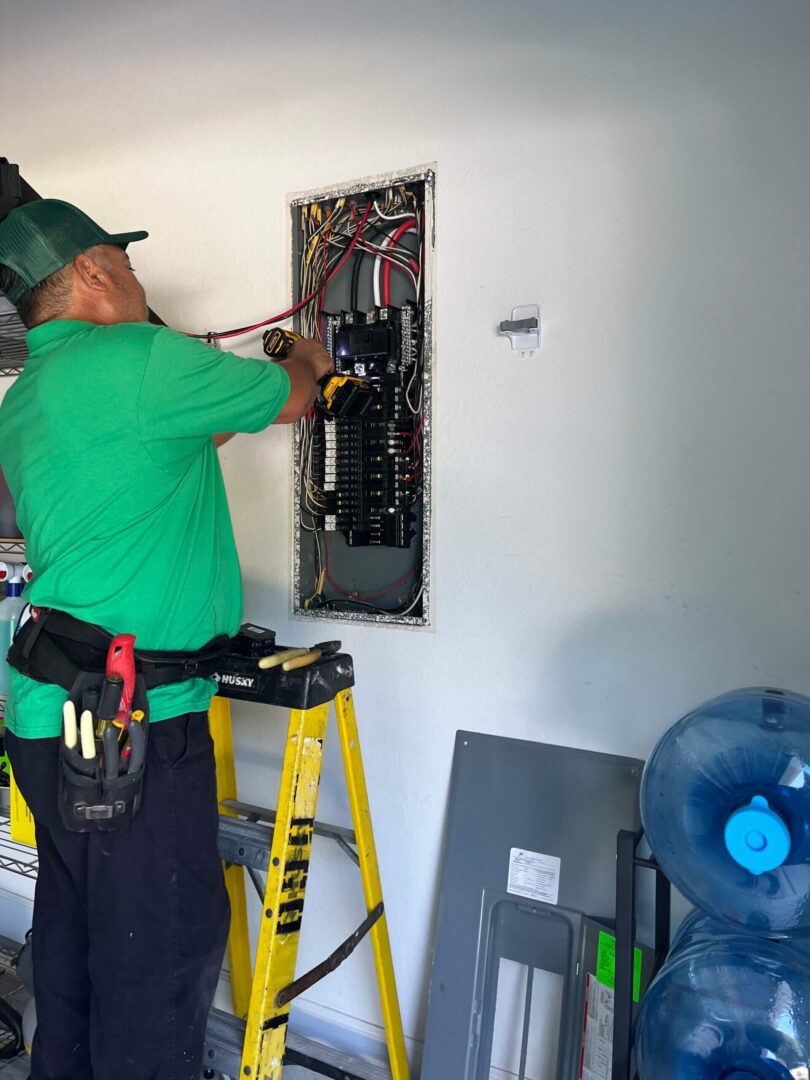
Then check the electrical panel. Look for a breaker that is sitting between ON and OFF or is marked GFCI or AFCI/GFCI. To reset a tripped breaker, move it fully to OFF first, then back to ON. Stand to the side of the panel and use only the breaker handle. Do not remove the panel cover or touch wiring inside the panel.
Why a GFCI Outlet Trips
A single trip does not always mean there is a serious wiring problem. Humidity, rain, condensation, or a damp extension cord can be enough to trigger GFCI protection. An appliance with a developing internal problem can do the same.
Repeated trips are different. They often point to a condition that should be diagnosed rather than repeatedly reset. Common causes include moisture in an outdoor box, a damaged cord, a worn appliance, overloaded or improperly connected equipment, a loose connection, damaged cable insulation, or an aging GFCI device.
In older homes around Magnolia and the greater Houston area, electrical systems may also have circuits that were changed over time without proper updates. Outdoor outlets, garage circuits, additions, and remodeled bathrooms deserve particular attention because they are exposed to heavier use and stricter safety requirements.
When the Reset Button Will Not Stay In
A GFCI reset button usually will not stay in for one of three reasons: the outlet has no incoming power, it senses a fault downstream, or the device itself has failed. Newer GFCI outlets may also refuse to reset when they reach the end of their service life.
First, make sure the related breaker is on. If it immediately trips again, leave it off. Next, unplug every device on the affected circuit and try the GFCI reset button again. If the outlet resets only after an appliance is unplugged, that appliance or its cord needs attention before it is used again.
If nothing is plugged in and the GFCI still will not reset, the issue may be in the wiring, an exterior outlet, a junction box, another protected receptacle, or the GFCI itself. This is not a good situation for trial-and-error repairs. Wiring faults can remain hidden behind walls or in weather-exposed boxes, and bypassing the protection removes a key safety feature.
Do Not Bypass or Replace Protection Improperly
Never replace a GFCI outlet with a standard outlet just to stop nuisance tripping. Never tape the reset button, defeat a breaker, or continue using an outlet that trips when a particular appliance is connected. Those shortcuts can expose people to shock and can conceal a failing appliance or damaged wiring.
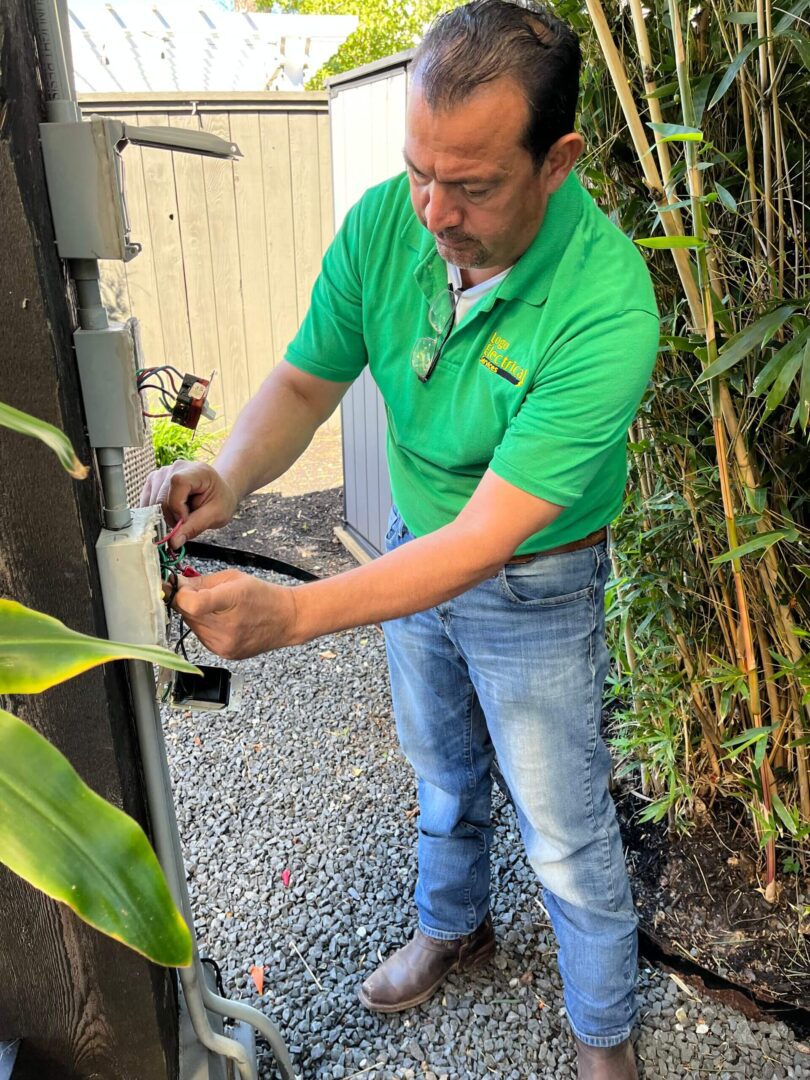
Replacing a GFCI outlet can appear simple, but correct installation depends on identifying the LINE and LOAD terminals, confirming grounding and polarity, securing the box, and testing the completed work. A wiring mistake can leave an outlet energized without proper GFCI protection, or disable protection for outlets farther down the circuit.
For homeowners who are not comfortable verifying a de-energized circuit and making proper electrical connections, a licensed electrician is the safer choice. The cost of a professional diagnosis is often far less than the risk of damaged equipment, hidden moisture intrusion, or an electrical injury.
When to Call a Licensed Electrician
Schedule service promptly if the GFCI trips repeatedly, will not reset after all devices are unplugged, feels warm, shows burn marks, has water exposure, or is connected to a pool, hot tub, sump pump, well equipment, or other critical equipment. You should also call for help if multiple outlets have lost power and you cannot identify the source safely.
A qualified electrician can test the circuit, inspect the outlet and connections, isolate a faulty appliance or downstream receptacle, and determine whether replacement, repair, or a circuit upgrade is needed. For homeowners who want clear explanations and code-compliant repairs, Logo Electrical Services can diagnose GFCI and outlet problems without guesswork.
A GFCI outlet is doing an essential job when it trips. Reset it carefully once, pay attention to what caused the interruption, and treat a recurring problem as the reason to get a trusted professional involved.