A dead outlet can be more than an inconvenience when it leaves a refrigerator, phone charger, lamp, or home office without power. Knowing how to test dead outlet problems safely can help you rule out simple causes, but it should also help you recognize when an electrical repair needs a licensed professional. An outlet that loses power without an obvious reason may be connected to a tripped safety device, a loose wire, or a developing circuit issue.
Start with simple, low-risk checks. Do not remove the outlet cover or touch wiring unless you are qualified to perform electrical work. If you find heat, discoloration, a burning odor, sparking, or a breaker that will not stay on, stop testing and call an electrician.
Start by Confirming the Outlet Is Actually Dead
Before assuming the receptacle has failed, plug in a device you know works, such as a lamp or phone charger. Test that same device at a working outlet first. Chargers, power strips, and appliances can fail too, so this quick step prevents an unnecessary repair call.
Next, check whether both plug openings on the receptacle are dead. In some homes, the upper and lower halves of an outlet are controlled separately. One half may be connected to a wall switch while the other stays energized. Turn nearby wall switches on and off, including switches that appear to control only lights.
If you have a plug-in outlet tester, use it only after confirming it works on a known live receptacle. It can indicate whether power is reaching the outlet and may reveal common wiring concerns. A tester is useful for basic information, but it cannot tell you why power was lost or confirm that every connection behind the wall is safe.
A non-contact voltage tester can also be helpful, especially for checking whether a cord, switch box, or nearby wiring appears energized. However, these tools can give misleading readings around electrical fields and cannot replace professional diagnosis. Treat every reading as a clue, not a final answer.
How to Test a Dead Outlet at the Breaker Panel
A tripped circuit breaker is one of the most common reasons an outlet stops working. Go to your electrical panel and look for a breaker that is sitting between the ON and OFF positions. Some breakers do not look fully tripped at first glance, so inspect the panel carefully.
To reset a breaker, move it firmly all the way to OFF first, then switch it back to ON. Check the dead outlet again using your known-working lamp or tester. Do not force a breaker, and do not repeatedly reset one that trips again. A breaker that will not remain on is doing its job by responding to an overload, short circuit, ground fault, or equipment problem.
Modern homes may also have arc-fault circuit interrupter breakers, often called AFCI breakers. These are designed to detect dangerous arcing conditions that ordinary breakers may miss. If an AFCI breaker trips repeatedly, the cause may be anything from a damaged appliance cord to a loose connection in an outlet or switch. That is not a problem to solve by installing a larger breaker or bypassing the protection.
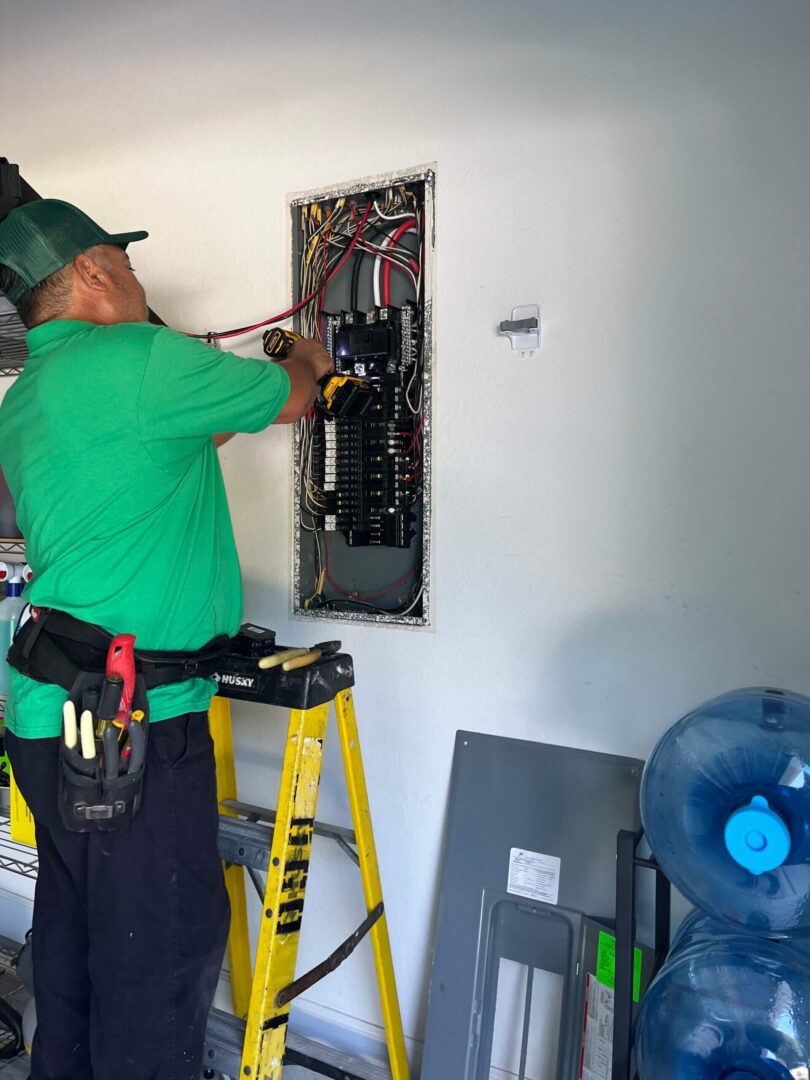
Keep the panel cover closed while checking breakers. The area behind the cover contains energized components, even if you have switched off an individual circuit. Homeowners can safely reset a normal breaker, but electrical panel repairs and internal testing belong to a licensed electrician.
Check GFCI Outlets Before Assuming Wiring Has Failed
A GFCI outlet is another frequent source of confusion. These outlets have TEST and RESET buttons and are commonly installed in bathrooms, kitchens, garages, laundry rooms, exterior areas, and other locations near water. One GFCI can protect several standard outlets farther down the circuit.
That means a dead outlet in a bedroom, garage, patio, or another area may be controlled by a GFCI located somewhere else. Look for GFCI outlets in nearby rooms and less obvious places, including the garage, exterior walls, utility room, and bathrooms. Press RESET firmly on each one you find, then recheck the dead outlet.
If a GFCI will not reset, do not keep pressing the button. It may have no incoming power, may have detected a problem on the circuit, or may be worn out. Moisture, damaged outdoor equipment, and a faulty appliance can all trigger a GFCI. Unplug devices on the affected circuit before trying one reset. If it trips again or cannot be reset, schedule professional service.
Once power is restored, press the TEST button on the GFCI to make sure it turns off, then press RESET to restore power. This is a good habit for GFCIs that protect bathrooms, kitchens, garages, and outdoor outlets.
Look for Clues Without Taking Anything Apart
The location and timing of the failure often point toward the cause. Did the outlet stop working after you used a space heater, hair dryer, vacuum, microwave, or power tool? High-demand appliances can overload a circuit, particularly in older homes where several rooms may share one breaker.
Also consider whether multiple outlets, lights, or switches stopped working together. If they did, the problem is likely upstream at a breaker, GFCI, switch, junction box, or another receptacle. A single dead outlet may have a failed receptacle, but it can also be the first sign of a loose connection elsewhere on the circuit.
Pay attention to warning signs around the affected area. These include a loose plug fit, a warm faceplate, flickering lights, buzzing, a crackling sound, scorch marks, or intermittent power. A receptacle that works only when a plug or cord is moved can have a worn internal contact or damaged connection. Shut off the circuit and avoid using it until it has been inspected.
Older homes deserve extra caution. Connections made with aging push-in terminals, deteriorated wiring, or improperly modified circuits can loosen over time. A loose electrical connection creates resistance and heat, which can damage the outlet box and increase fire risk long before the breaker trips.
When a Multimeter Helps and When It Does Not
A multimeter can measure voltage at an outlet, but using one inside a live receptacle requires knowledge, proper meter settings, intact test leads, and steady technique. For many homeowners, a plug-in tester and the checks above provide enough information to decide whether to call an electrician.
If you are experienced with a multimeter, verify the meter on a known working outlet first. A normal residential receptacle should typically read about 120 volts from the narrow slot to the wide slot. Unexpected readings, voltage on only one side of the outlet, or voltage that disappears under load can point to an open neutral, loose connection, or other circuit fault.
Do not use a damaged meter, worn leads, or a meter not rated for residential electrical testing. Never insert probes into an outlet if you are unsure which setting to use. Do not attempt to test inside an electrical panel, and do not remove the outlet from its box to inspect live wiring. The risk is not worth the guesswork.
When to Call a Licensed Electrician
A dead outlet needs professional attention when basic breaker and GFCI checks do not restore power. It is especially urgent if you notice heat, burning smells, smoke, sparks, repeated tripping, water exposure, damaged wiring, or power that comes and goes. Those symptoms can indicate a condition that is unsafe to leave in service.
A licensed electrician can trace the circuit, test the receptacle and upstream connections, identify failed GFCI or AFCI protection, and make repairs that meet current code requirements. This matters when the problem involves older wiring, an overloaded circuit, an improperly wired outlet, or an issue hidden in a wall or junction box.
For Magnolia and Houston-area homeowners, Logo Electrical Services can diagnose dead outlets with a safety-first approach and clear explanations before work begins. A professional repair should address the underlying cause, not simply replace the outlet and hope the issue does not return.
If an outlet has gone dead once, use that moment as a reason to pay attention to the rest of the circuit. A prompt inspection can turn a small electrical inconvenience into a straightforward repair before it affects your family’s comfort or safety.