A breaker that trips once after you plug in a space heater is annoying. A breaker that keeps shutting off the same room, appliance, or part of the house is a warning sign you should take seriously.
If you are asking, why does my breaker keep tripping, the short answer is that the circuit is trying to protect your home from overheating, overload, or a more dangerous electrical fault. The breaker is doing its job. The real question is what is forcing it to trip in the first place.
In many homes around Magnolia and the greater Houston area, this problem comes down to one of a few common issues. Sometimes it is a simple load problem. Sometimes it points to aging wiring, a failing breaker, moisture intrusion, or a larger panel issue. The difference matters, because the right fix depends on the actual cause.
Why does my breaker keep tripping in one area of the house?
When a breaker trips repeatedly, the location and timing usually tell part of the story. If it only happens in the kitchen, laundry room, garage, or a bedroom with a window AC unit, that is a clue. If it trips at random with no clear pattern, that points in a different direction.
The most common cause is an overloaded circuit. Every circuit has a limit. When too many devices draw power at once, the breaker senses that the wiring could overheat and cuts power before damage happens. This is common in older homes where modern appliances are being used on circuits that were never designed for today’s electrical demand.
A second common cause is a short circuit. This happens when a hot wire touches a neutral wire or something it should not touch. Shorts can create a sudden surge of current, and the breaker trips almost instantly. You may notice this when plugging in a certain lamp, using one outlet, or turning on one switch.
Ground faults are another possibility, especially in kitchens, bathrooms, garages, outdoor areas, and laundry spaces. In these situations, electricity is taking an unintended path to ground. That can happen because of damaged wiring, moisture, or a failing appliance. Ground faults are especially important to address quickly because they can create shock hazards.
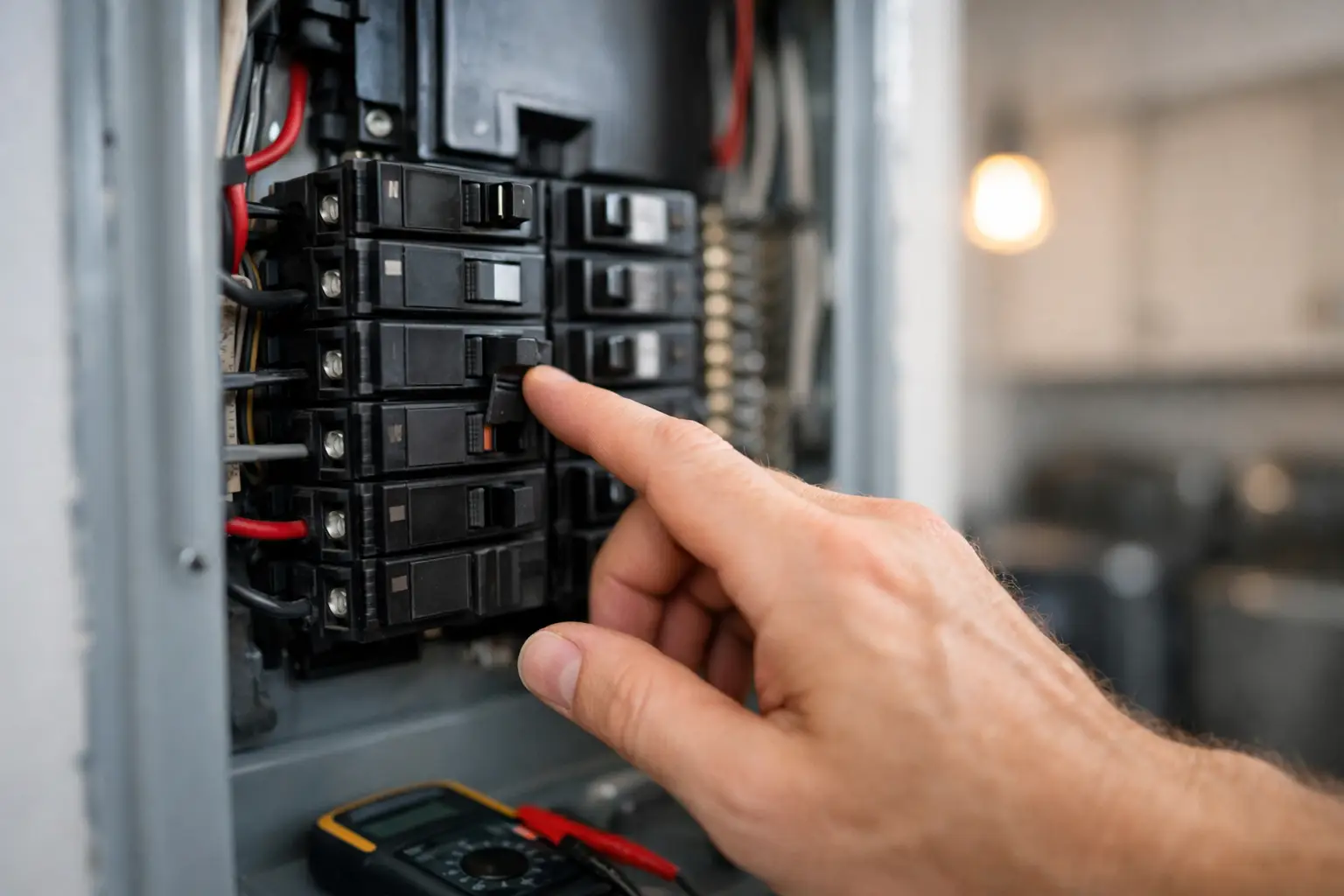
Then there is the breaker itself. Breakers do wear out. If one trips too easily, feels loose, or will not reset properly even after the load is reduced, the breaker may be failing rather than protecting against an active problem. That said, replacing a breaker without diagnosing the underlying issue can miss the real cause.
The most likely reasons a breaker trips
Too many things on one circuit
This is the issue we see most often in everyday residential service calls. A microwave, toaster oven, coffee maker, and air fryer running on the same kitchen circuit can be enough to trip a breaker. The same goes for space heaters, hair dryers, treadmills, portable AC units, and garage refrigerators.
Sometimes homeowners assume the breaker is bad because the problem started recently. In reality, the electrical demand changed. Maybe you added a freezer in the garage, started charging an EV, or converted a room into a home office with more electronics. The breaker may be responding exactly as it should.
A faulty appliance or device
If the breaker trips only when one specific appliance runs, that appliance may be the problem. Portable heaters are a frequent example. So are older refrigerators, disposal units, washing machines, and power tools with worn internal components.
The trade-off here is that unplugging the appliance may stop the tripping, but that does not always prove the house wiring is fine. A weak circuit can also be exposed by a high-demand appliance. It takes proper testing to know whether the issue is the appliance, the circuit, or both.
Damaged wiring or a short circuit
Loose connections, worn insulation, rodent damage, and pinched wires behind walls can all lead to short circuits. These problems are more serious than a simple overload because they can generate heat and arcing in places you cannot see.
Warning signs may include a burning smell, buzzing sounds, discolored outlets, warm switch plates, or a breaker that trips the moment it is reset. If you notice any of those signs, stop using that circuit and have it inspected by a licensed electrician.
Ground fault or moisture issue
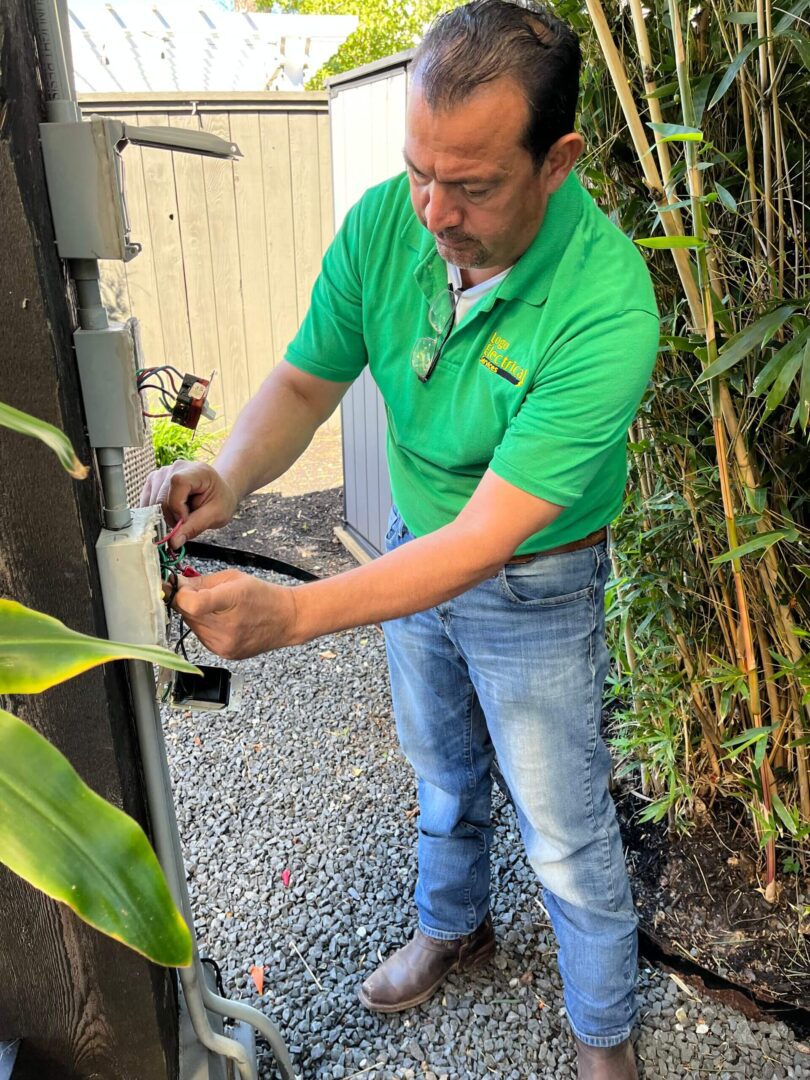
In Texas, humidity and weather exposure can play a role, especially in garages, exterior outlets, patios, and pool-related electrical equipment. Water and electricity are a dangerous combination. If moisture is getting into an outlet box, fixture, or connection, the breaker may trip to prevent injury.
This is one reason outdoor and wet-area electrical work needs to be installed correctly and kept in good condition. What looks like a nuisance trip can actually be a life-safety device responding to a hazardous condition.
An aging or undersized electrical panel
Sometimes the problem is bigger than one branch circuit. If your home has an older panel, limited capacity, or a history of electrical additions, recurring trips may point to a system that is no longer keeping up with the home.
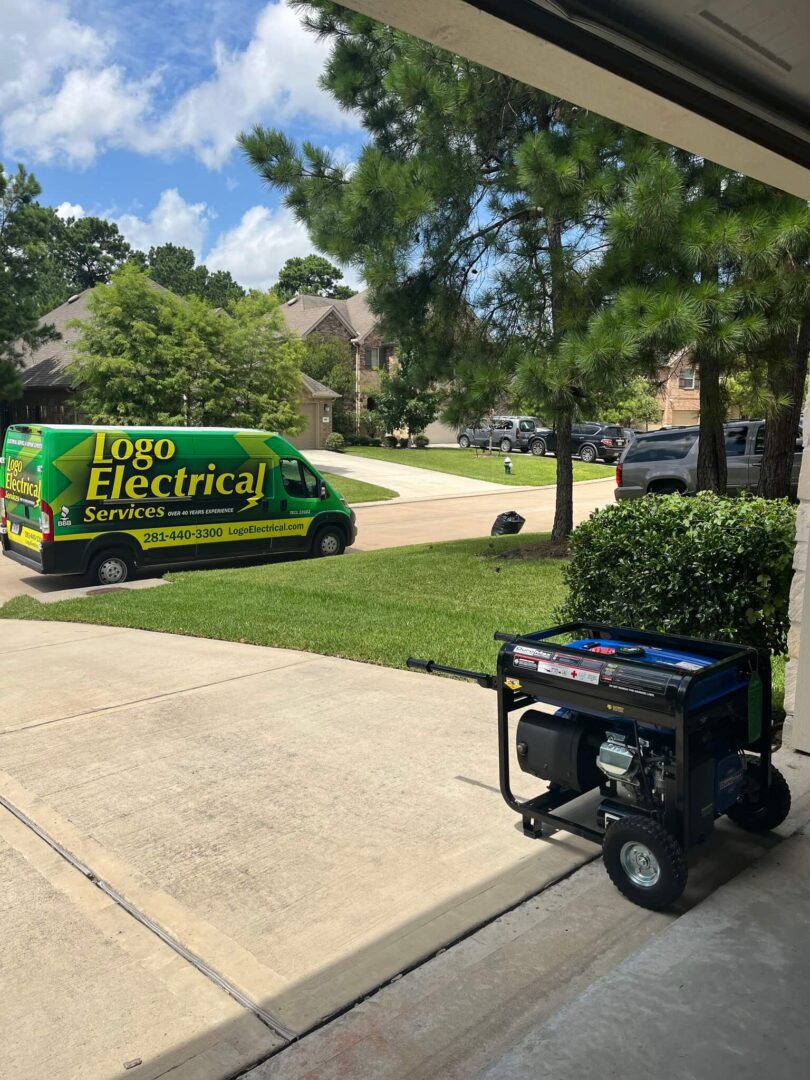
That is especially true in homes that have added major electrical loads over time, like hot tubs, workshop equipment, generator connections, upgraded HVAC, or EV chargers. The panel may still function, but it may not be the right fit for how the home is used today.
A bad breaker
Breakers are mechanical devices. Over time, heat cycles and normal wear can affect how they perform. A breaker that has tripped repeatedly for years may become weak. In that case, it may trip earlier than it should or fail to hold even with a normal load.
This is a real possibility, but it should be the conclusion after testing, not the first guess. Honest diagnosis matters here, because replacing parts you do not need is not the same as fixing the problem.
What you can safely check before calling an electrician
Start by noticing patterns. Does the breaker trip when you use one appliance, when several things run together, or during rain or high humidity? That information helps narrow the issue down quickly.
You can also unplug devices on the affected circuit and reset the breaker once. If it holds, plug items back in one at a time. If one device causes the trip, stop using it. If the breaker still trips with everything unplugged, the issue may be in the wiring, outlet, breaker, or panel.
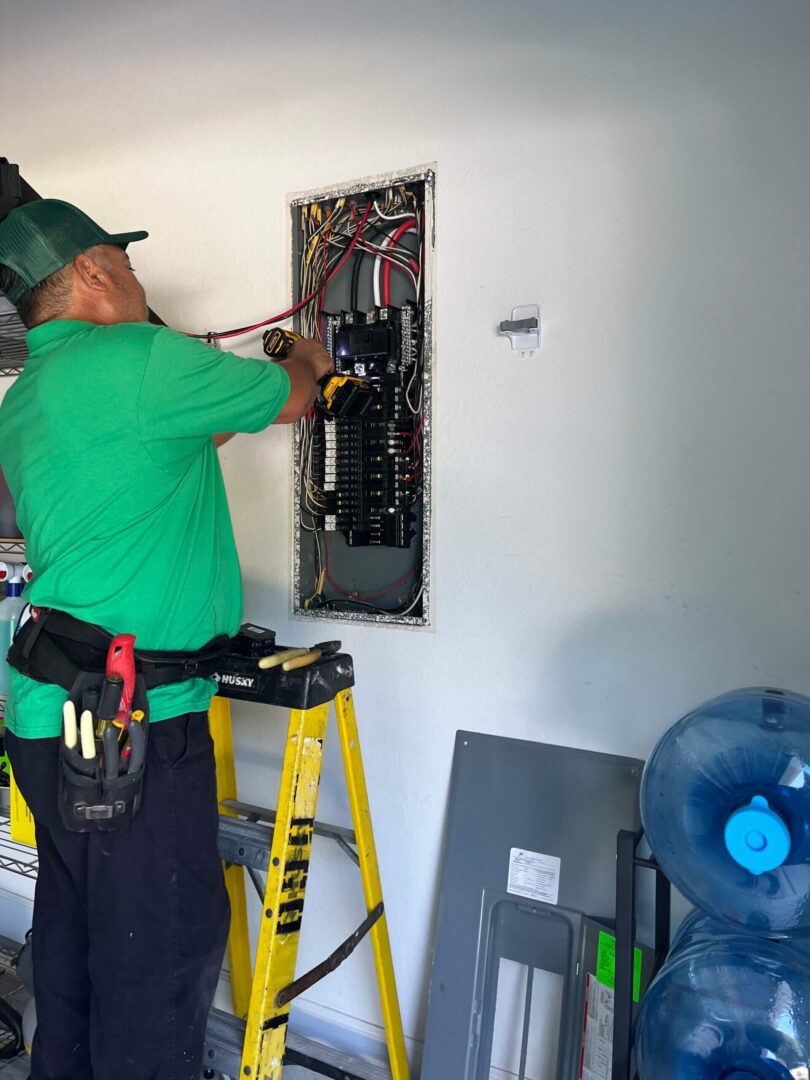
Take a look and use your senses, but do not open the panel or remove outlet covers yourself. If you smell something burning, hear crackling, see scorch marks, or feel warmth at outlets or switches, stop there. Those are signs to call a professional right away.
When breaker tripping is more than a nuisance
A lot of homeowners put up with recurring breaker trips longer than they should. They reset it, rearrange what is plugged in, and hope for the best. That may work for a short time with a simple overload, but it is not a good long-term plan.
Repeated tripping is a sign that something needs attention. The safest outcome might be a load-balancing fix or a dedicated circuit for a demanding appliance. In other cases, the right repair could involve replacing damaged wiring, correcting a faulty connection, upgrading a panel, or addressing moisture intrusion.
What you do not want is guesswork. Electrical problems can look similar from the outside while having very different causes inside the system. The right diagnosis protects your home, prevents repeat problems, and helps you avoid paying for the wrong repair.
Why does my breaker keep tripping after I reset it?
If a breaker trips again immediately or will not stay reset, that usually points to an active fault rather than a temporary overload. A direct short, ground fault, failed breaker, or serious wiring issue may be present.
That is not the time to keep forcing it back on. If the breaker will not hold, leave it off and have it checked. Resetting a breaker over and over without finding the cause can make a dangerous situation worse.
For homeowners who want clear answers, this is where experienced troubleshooting matters. A licensed electrician can test the circuit, inspect the panel, and tell you whether the issue is minor, urgent, or part of a larger upgrade need. At Logo Electrical Services, that kind of honest, straightforward diagnosis is exactly what homeowners expect from a family-owned company that has been doing this work for decades.
If your breaker keeps tripping, trust the warning instead of fighting it. Your electrical system is telling you something, and catching it early is usually the safer and more affordable path.