A house rewiring project is not a cosmetic upgrade you can judge by looking at a wall plate. Much of the work happens behind walls, above ceilings, and inside the electrical panel. This house rewiring checklist guide helps Magnolia and Houston-area homeowners recognize when a full or partial rewire may be needed, prepare for the work, and make informed decisions with a licensed electrician.
Older wiring can work safely when it has been properly maintained, but age alone is not the only concern. The condition of the wiring, the capacity of the service panel, past renovations, and the demands of modern appliances all matter. A clear plan prevents surprises and helps ensure the finished system is safe, code-compliant, and built for how your family uses the home.
Start With the Signs Your Home May Need Rewiring
Electrical problems often begin as small annoyances: a breaker that trips, a light that flickers, or an outlet that feels loose. Those symptoms do not always mean the entire house needs new wiring. They do mean the system deserves professional attention, especially when the issue repeats.
Arrange an evaluation if you notice burning odors, warm or discolored outlets or switches, buzzing from the panel, frequent shocks, or breakers that will not stay on. These conditions can point to loose connections, overloaded circuits, damaged conductors, or equipment that has reached the end of its useful life. Turn off power to any affected area when it is safe to do so, and do not keep resetting a breaker to make a problem disappear.
Homes built decades ago may also have wiring methods that warrant a closer look. Knob-and-tube wiring, aluminum branch-circuit wiring, ungrounded outlets, fuse boxes, and undersized panels can complicate renovations, insurance questions, and day-to-day electrical safety. The right solution depends on what is installed, its condition, and the work you want the electrical system to support.
House Rewiring Checklist Guide: Plan Before Work Begins
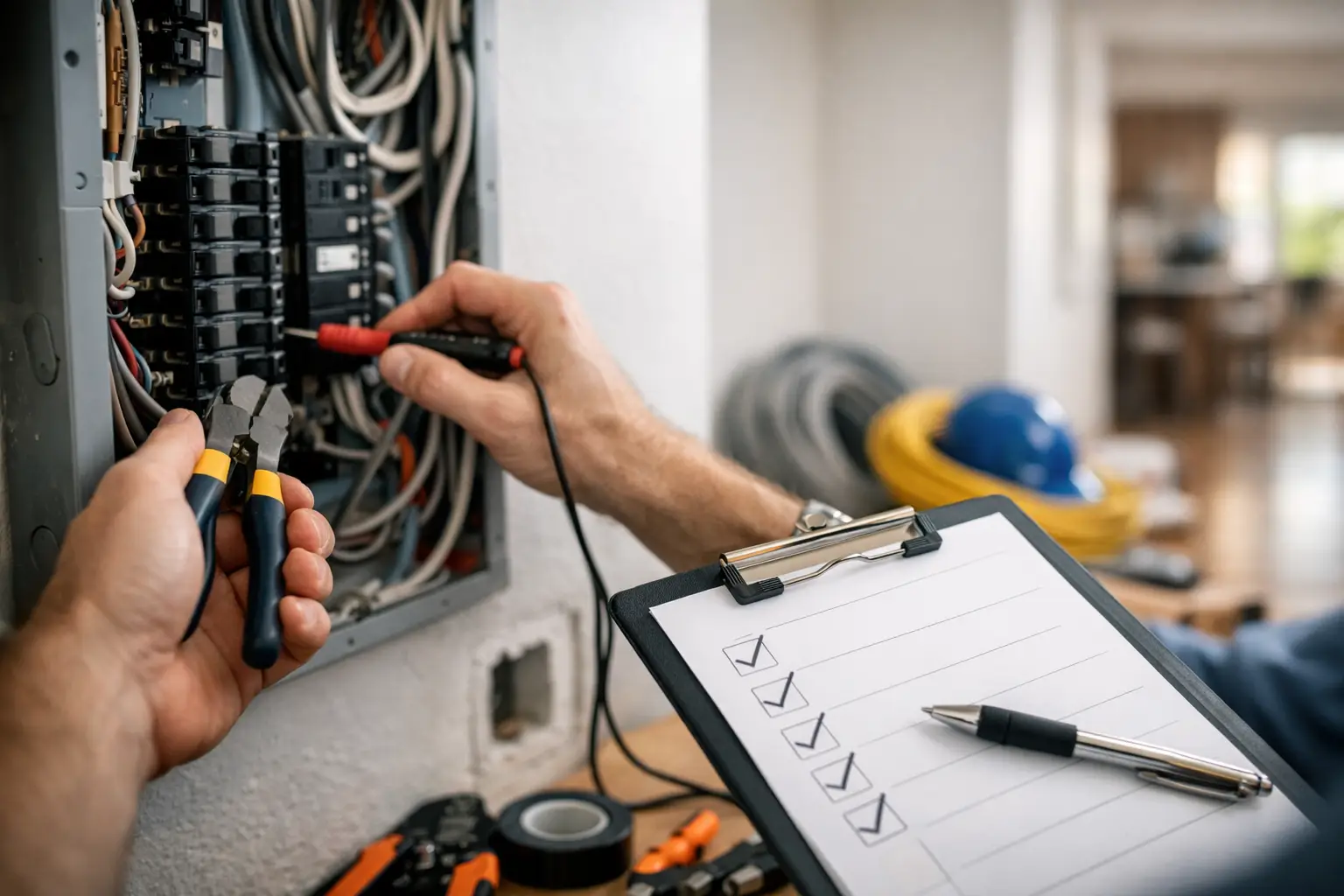
A rewire goes more smoothly when the homeowner and electrician agree on the scope before walls are opened. Use the following checklist as a conversation tool during an on-site assessment.
- Document current problems. Note which rooms have flickering lights, tripped breakers, dead outlets, overloaded power strips, or switches that do not work properly. Photos and a short list of when the issue occurs can help with diagnosis.
- Identify large electrical loads. Include HVAC equipment, electric ranges, dryers, water heaters, pool equipment, well pumps, hot tubs, workshop tools, and any other equipment that may require a dedicated circuit.
- Plan for upcoming improvements. An EV charger, standby generator, remodeled kitchen, home office, outdoor kitchen, security lighting, or additional air-conditioning equipment can change the size and layout of the electrical upgrade.
- Count outlet, lighting, and switch locations. Think about how each room is actually used. Bedrooms, living rooms, kitchens, garages, patios, and workspaces often benefit from more thoughtfully placed outlets than older homes provide.
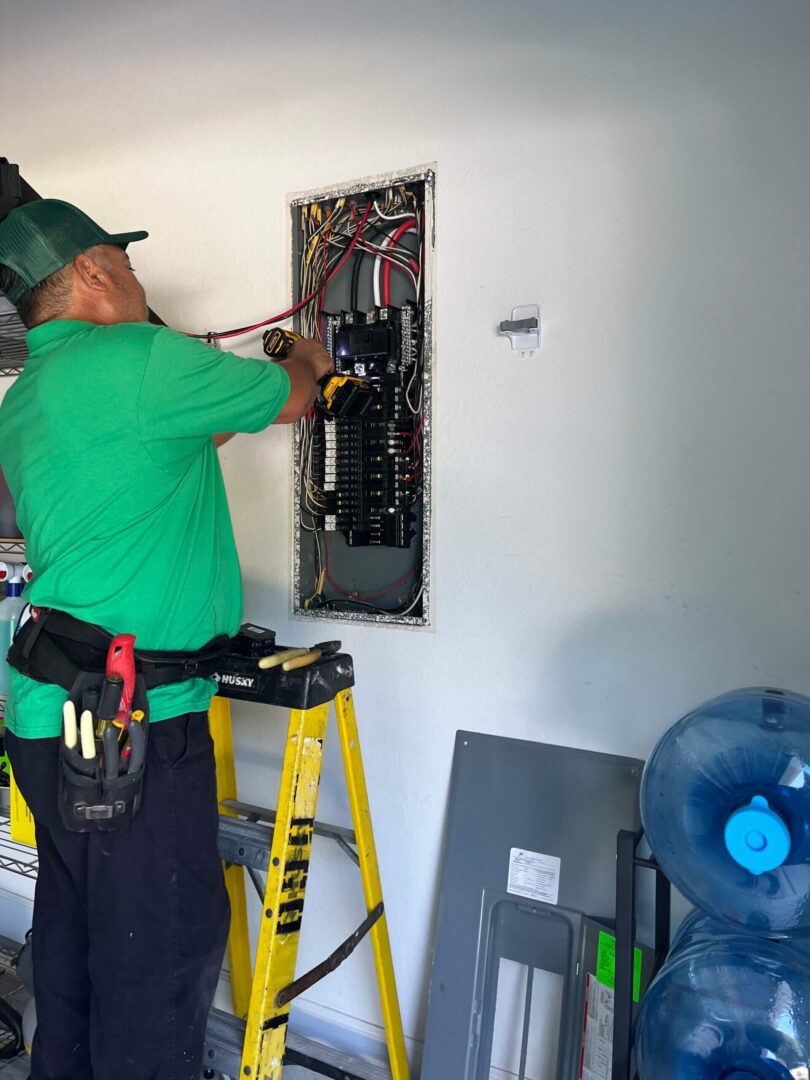
- Review panel capacity and condition. Rewiring branch circuits without addressing an outdated or crowded panel may limit the value of the project. Your electrician should determine whether a panel upgrade, service upgrade, or subpanel is appropriate.
- Ask about protection devices. Ground-fault circuit interrupter protection, arc-fault protection, proper grounding and bonding, smoke and carbon monoxide alarm circuits, and whole-home surge protection may be part of a modern safety plan.
- Confirm permits and inspections. Electrical work should be completed according to applicable local requirements. A licensed contractor can explain the permitting process and coordinate inspections when required.
This is also the time to decide what is essential now and what can be prepared for later. For example, installing conduit or making room in a panel for a future generator or EV charger may be more cost-effective while walls are already open. On the other hand, adding every possible upgrade can stretch the budget. A good electrician will explain the safety priorities first, then help you weigh convenience and future planning.
Decide Whether You Need a Full or Partial Rewire
A full rewire typically replaces wiring throughout the home and may involve a new panel, updated grounding, new outlets and switches, and new circuits for major appliances. It is often the best choice when wiring is broadly deteriorated, unsafe, improperly altered, or unable to support the home’s electrical needs.
A partial rewire can make sense when a problem is limited to a specific area, such as an addition, kitchen, garage, or damaged circuit. It may also be practical during a targeted remodel. The trade-off is that an older system remains in other parts of the home, so the electrician should clearly explain what is being replaced, what remains, and whether future work is likely.
Do not assume a panel upgrade alone solves every wiring concern. A new panel can provide additional capacity and safer breaker protection, but it does not repair damaged conductors hidden in walls or add grounding where it is missing. Likewise, replacing a few outlets can improve appearance without addressing the circuit feeding them. The scope should follow the diagnosis, not a one-size-fits-all package.
Prepare Your Home for Rewiring Work
Rewiring is disruptive because electrical pathways are hidden behind finished surfaces. In some homes, electricians can route new wiring through attics, crawl spaces, garages, or unfinished areas and reduce drywall access. In others, limited wall openings are necessary. The construction details of your home will affect the schedule, cost, and restoration needs.
Before work starts, ask which rooms will be affected, when power will be off, and whether furniture needs to be moved. Clear access around the electrical panel, attic entry, crawl-space access, outlets, and switches. Remove fragile items from walls and shelves in the work areas, and make plans for pets, children, and anyone who relies on powered medical equipment.
Temporary power arrangements may be possible for portions of the home, but homeowners should expect some planned outages. If you work from home, protect refrigerated food, depend on internet service, or have a security system, discuss those needs early. Clear communication about the work sequence is one of the easiest ways to reduce stress during a major electrical project.
Ask the Questions That Protect Your Investment
The lowest estimate is not always the lowest long-term cost. Rewiring requires careful design, accurate load calculations, quality materials, disciplined workmanship, and proper testing. A vague quote may leave important items out, only for them to appear later as change orders.
Ask whether the contractor is licensed and insured, what the proposal includes, how unexpected conditions will be handled, and whether permits and inspections are part of the scope. Request a clear explanation of panel work, circuits being added or replaced, outlet and lighting locations, wall access, patching responsibilities, and cleanup. Honest pricing starts with a detailed scope that makes it easier to compare options fairly.
You should also ask how the completed system will be labeled and tested. A properly labeled panel is not a small detail. It makes future maintenance, emergency shutoffs, and later upgrades safer and easier. Final testing should confirm that outlets, switches, breakers, grounding, and protective devices operate as intended.
Build for the Way You Live Now
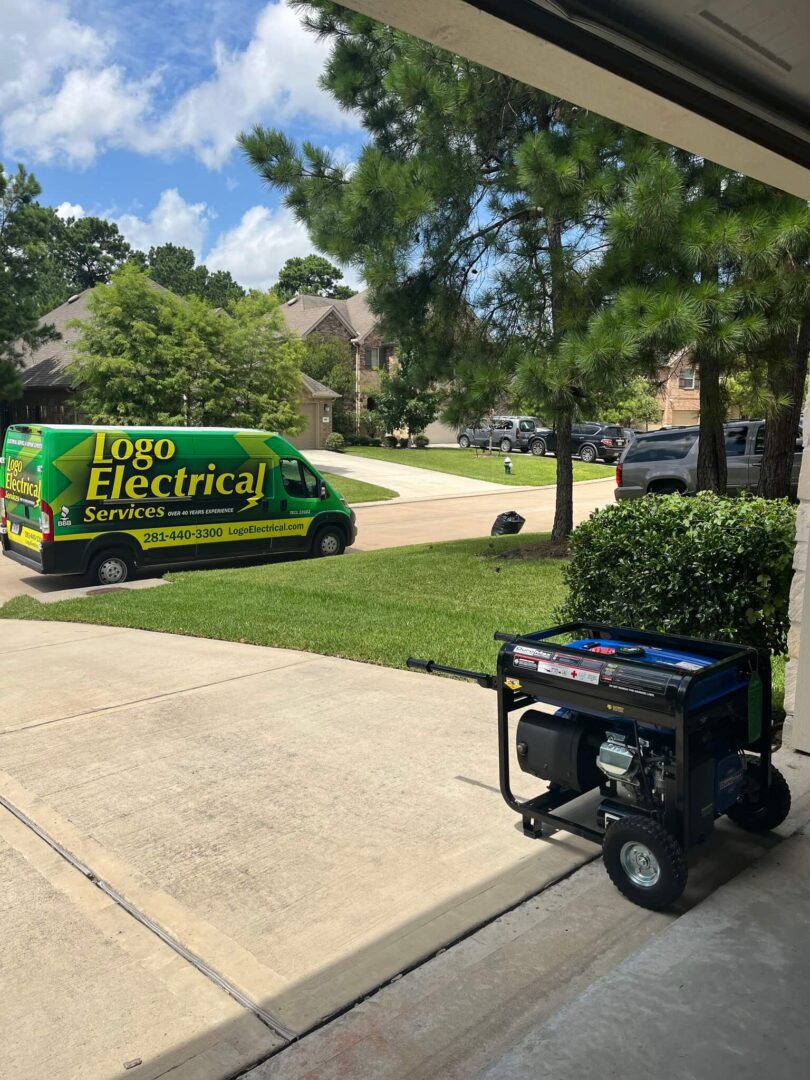
A rewire is a rare opportunity to correct the compromises common in older homes. Consider dedicated circuits where they are needed, better kitchen and garage outlet placement, lighting controls that match how rooms are used, and outdoor power for maintenance or entertaining. If backup power is a priority in the Houston area, generator readiness should be discussed before the electrical design is finalized.
Whole-home surge protection is another practical consideration. Modern homes contain more sensitive electronics than ever, from appliances and HVAC controls to televisions, computers, and smart-home equipment. It does not replace good wiring or proper grounding, but it can add a valuable layer of protection when installed as part of a complete electrical plan.
For homeowners in Magnolia and surrounding communities, Logo Electrical Services brings licensed, family-owned experience to electrical upgrades that require careful planning and clean, professional work. The best next step is an on-site evaluation: it gives you a clear picture of your home’s wiring, your real priorities, and the safest path forward before a small electrical concern becomes a larger disruption.