One light that flickers once in a while can be annoying. Lights that dim, pulse, or flicker throughout the house are different. If you are wondering how to troubleshoot flickering house lights, the goal is not just to stop the nuisance. It is to figure out whether you have a simple fixture issue or a larger electrical problem that needs immediate attention.
Flickering lights can come from something minor, like a loose bulb, or something more serious, like a failing breaker, overloaded circuit, damaged wiring, or trouble at the service connection. The safest approach is to start with the easy checks, pay attention to patterns, and know when to stop and call a licensed electrician.
Start with the pattern, not the fixture
Before touching anything, notice when the flickering happens. Does it affect one light, one room, or the whole house? Does it happen when the air conditioner starts, when the microwave runs, or only in the evening? Those details matter because they point to very different causes.
If only one lamp or one ceiling fixture flickers, the problem is often local. That could mean a loose bulb, a worn socket, a failing switch, or a bad fixture. If several lights on one circuit flicker together, the issue may be in the branch wiring, breaker, or circuit load. If lights across multiple rooms flicker at the same time, especially with appliance use, the problem may involve the panel, service equipment, or utility connection.
This is where homeowners can help speed up the diagnosis. A quick mental note of what flickers, when it happens, and what equipment is running can save time and reduce guesswork.
How to troubleshoot flickering house lights safely
Start with the least invasive checks. If a single bulb is flickering, turn off the switch, let the bulb cool, and make sure it is seated properly. A bulb that is not fully tightened can flicker even when everything else is fine. If it still flickers, swap in a new bulb.
LED bulbs deserve special attention. Not all LEDs work well with older dimmer switches, and mismatched dimmer and bulb combinations are a very common cause of flickering. If the light is on a dimmer, check whether the bulb is marked as dimmable. If it is not, flickering is not surprising. Even dimmable LEDs can misbehave if the dimmer is outdated or not compatible with that bulb type.
If replacing the bulb does not fix the problem, move outward. Try another lamp in the same outlet, or another bulb in the same fixture. If the issue follows the lamp, the lamp is likely the problem. If the issue stays with the outlet or fixture, the wiring device, switch, or fixture itself may need repair.
You can also test whether the flickering is tied to heavy electrical demand. Turn on a large appliance like the HVAC system or a vacuum and watch nearby lights. A slight momentary dimming when a major motor starts can happen in some homes, especially older ones. Constant flickering or noticeable dips in brightness are different. That can point to a load issue, weak connection, undersized service, or a panel problem.
Common causes of flickering lights in a home
A loose bulb or failing lamp is the easiest fix, but it is far from the only one. In residential service work, several causes come up again and again.
A bad switch is common, especially in older homes. If the flickering happens when you touch the switch, or if the switch feels warm, loose, or makes crackling sounds, stop using it. A worn switch can create an inconsistent connection and should be replaced.
Loose wiring connections are more serious. Connections can loosen over time at fixtures, switches, outlets, breakers, and panel terminations. When electricity cannot flow cleanly through a connection, lights may flicker, and heat can build up. That is not a watch-and-wait issue.
Circuit overload is another possibility. If a room, garage, or kitchen circuit has too many devices drawing power at once, lights may dim or flicker under demand. This is especially common in older homes that were not designed for modern appliance loads, home offices, EV chargers, or large entertainment setups.
Panel and breaker issues can also show up as flickering. A failing breaker may not trip right away, but it can behave inconsistently under load. Aging electrical panels can develop hot spots, poor bus bar connections, or other reliability problems that show up first as lighting issues.
Then there is the service side of the system. If lights brighten in one part of the house while dimming in another, or if the flickering is widespread and unpredictable, there may be a loose neutral or utility-side problem. That is a higher-risk situation and should be checked right away.
Warning signs that mean do not keep troubleshooting
Some flickering can wait for a scheduled repair. Some should be treated as urgent.
If you notice a burning smell, buzzing from the panel or outlets, warm switches, scorch marks, repeated breaker trips, or flickering that affects large areas of the home, stop using the affected circuit if possible. The same goes for lights that change brightness dramatically when appliances turn on. Those symptoms can point to failing connections or service problems that create both safety and equipment risks.
A loose neutral deserves special mention because it can cause unstable voltage. That may damage electronics and appliances, not just light bulbs. If brightness swings are severe or happening throughout the house, this is not a DIY diagnosis.
What homeowners can check – and what should be left alone
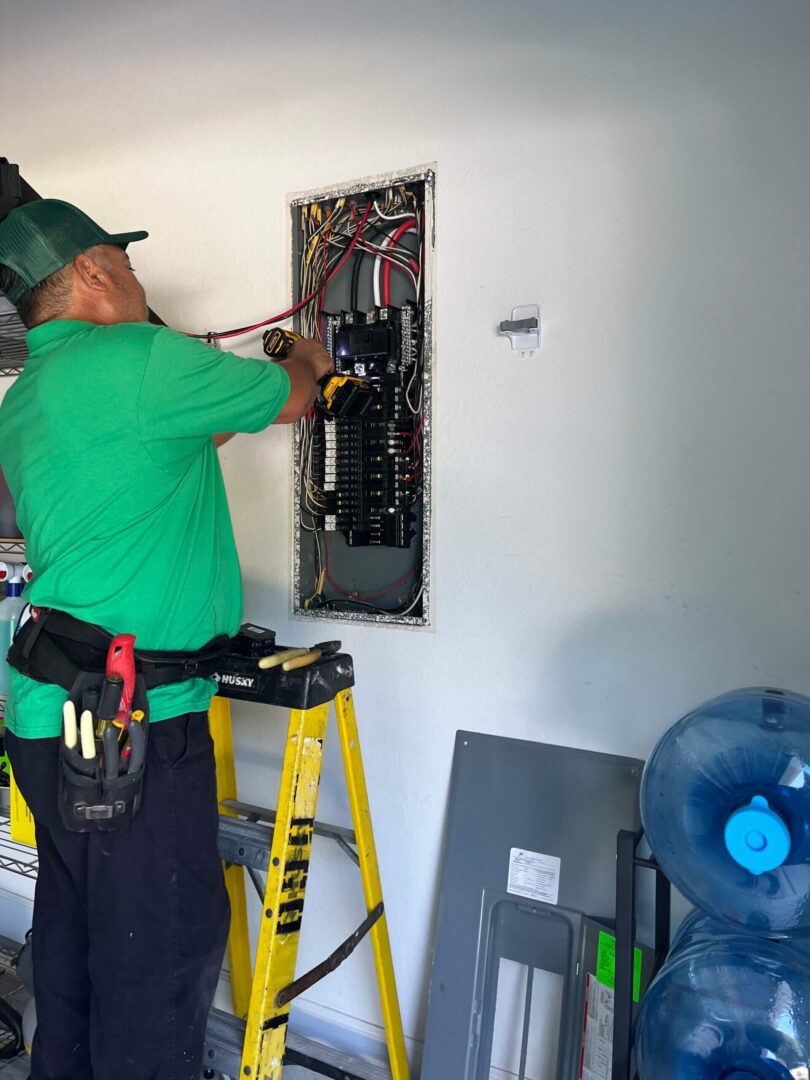
There is a reasonable line between basic homeowner troubleshooting and electrical repair. Replacing a bulb, testing a lamp in another outlet, or observing whether flickering happens with certain appliances is appropriate. Opening a service panel, tightening electrical connections, or replacing breakers without proper training is not.
Even something that seems simple, like replacing a switch or outlet, depends on the condition of the wiring behind it. In older homes, conductors may be brittle, improperly spliced, or part of a larger issue. What looks like a one-part fix can turn into a safety problem quickly.
That is why experienced troubleshooting matters. A licensed electrician is not just changing parts until the flickering stops. The real job is finding the source, checking whether the problem is isolated or systemic, and making a code-compliant repair that lasts.
When flickering lights point to a bigger upgrade
Sometimes the repair is straightforward. Other times the flickering is a symptom of an electrical system that has outgrown the home.
If your panel is older, your breakers are crowded, or you have added major loads over the years, the house may need more than a repair call. Generator equipment, EV chargers, updated kitchen circuits, modern HVAC systems, and home office loads all put pressure on older electrical infrastructure. In those cases, a panel upgrade, dedicated circuits, or whole-home surge protection may be the right long-term move.
This is especially true in homes where the flickering happens during normal daily use, not just under unusual demand. If your system struggles every time the AC kicks on or multiple appliances run together, the issue may be less about one bad light and more about overall capacity and reliability.
How a licensed electrician diagnoses flickering lights
A professional diagnosis usually starts with the same pattern questions a homeowner notices, then moves into testing. An electrician may check the fixture, switch, branch circuit, breaker performance, panel connections, voltage stability, and service condition. If the problem appears load-related, they may measure what happens when major appliances turn on.
The value here is accuracy. Honest troubleshooting means ruling out the simple causes first, then identifying whether the problem is in the device, the circuit, the panel, or the incoming service. That protects you from paying for the wrong repair and helps prevent repeat issues.
For homeowners in Magnolia and nearby Houston-area communities, this is where working with a licensed, local contractor matters. A company like Logo Electrical Services brings the kind of residential experience that helps spot whether a flickering problem is a minor fix, an aging panel issue, or something that needs fast attention for safety.
A practical way to respond
If the flickering is limited to one light, start with the bulb, lamp, and switch. If it affects multiple fixtures, happens when large appliances run, or comes with buzzing, heat, or burning odors, treat it as a system issue and schedule service promptly. If the flickering is severe or widespread, do not wait.
House lights are supposed to be steady. When they are not, they are telling you something. The smartest move is to listen early, before a small electrical problem turns into a larger and more expensive one.