If you are searching for how to ground residential electrical service, you are probably dealing with more than a technical question. You may be upgrading a panel, replacing an old service, adding a generator, or trying to understand whether your home is actually protected the way it should be. Grounding is one of those parts of an electrical system that homeowners rarely see, but when it is wrong, the safety risk is real.
A properly grounded electrical service helps stabilize voltage, gives fault current a path to travel, and supports the safe operation of breakers, surge protection, and connected equipment. It is not the same thing as simply driving a rod into the ground and calling it done. In a residential setting, grounding has to be designed and installed as a complete system, with the right materials, the right connections, and the right bonding points.
What grounding a residential electrical service really means
When homeowners ask how to ground residential electrical service, they often picture one component – usually a ground rod. In reality, service grounding includes several parts working together. There is the grounding electrode system, the grounding electrode conductor, the service equipment bonding, and the connections to things like metal water piping if present and allowed by code.
The purpose is not to make electricity “go into the earth” during normal operation. Your home’s electrical system runs on insulated conductors that carry current out and back. Grounding and bonding are there for abnormal conditions, such as lightning, surges, insulation failure, or a fault that energizes metal parts that should not be energized.
That distinction matters because a system can look grounded to a homeowner and still be unsafe. A loose clamp, an undersized conductor, a missing bond, or corrosion at a connection can keep the system from performing the way it should when a problem occurs.
The basic components of a grounded service
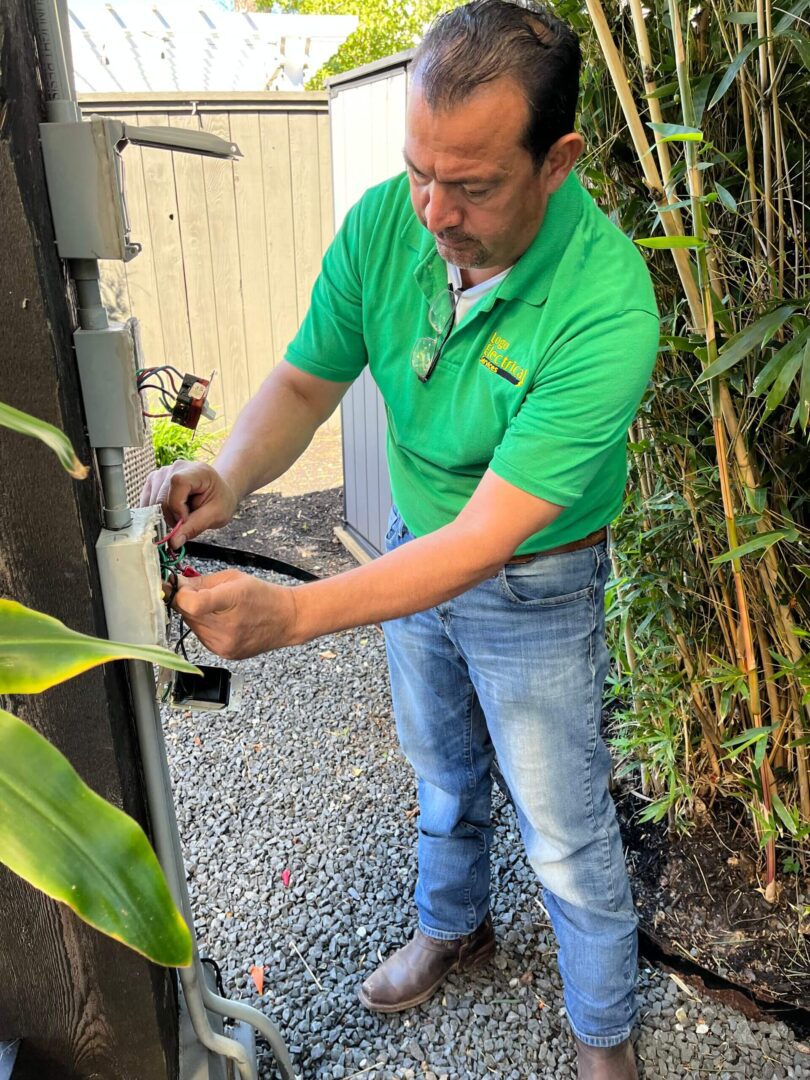
A typical residential service grounding system includes one or more grounding electrodes. These may be ground rods, a concrete-encased electrode in newer construction, or a metal underground water pipe if it qualifies under current code rules. The grounding electrode conductor connects the service equipment to those electrodes.
Inside the main service equipment, the grounded conductor and equipment grounding system are bonded at the correct location. That is a very specific point in the system, and it is one area where DIY work often goes wrong. Bonding in the wrong place, or failing to bond where required, can create dangerous conditions and nuisance issues that are hard to diagnose.
Homes may also need bonding for metal water lines, gas piping systems where required by code and manufacturer instructions, and supplemental systems such as generators and surge protection devices. What is required depends on the home, the age of the installation, and any upgrades being performed.
How to ground residential electrical service in practical terms
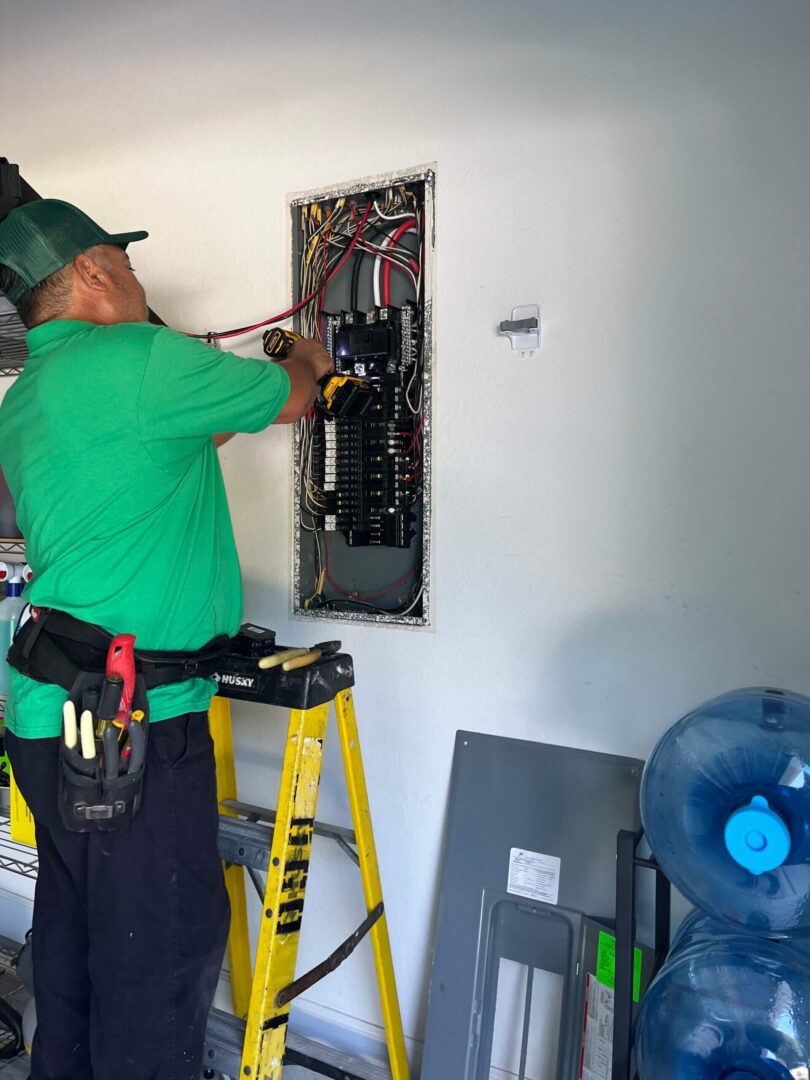
At a high level, grounding a residential electrical service starts with identifying the service type, service location, electrode options, conductor sizing, and bonding requirements. Then the grounding electrode system is installed, connected to the service equipment, and verified for continuity, code compliance, and proper termination.
In a newer home, this may mean connecting to a concrete-encased electrode and supplemental ground rods. In an older home, it may involve replacing corroded clamps, correcting an undersized grounding conductor, adding required electrodes, and cleaning up years of patchwork repairs. The job can be straightforward, or it can expose several hidden deficiencies.
The details matter. Ground rods have installation depth requirements. Conductors must be protected from physical damage where needed. Connections have to be made with listed fittings. The grounding path has to remain continuous. If a panel upgrade is being performed, the service bonding arrangement must be evaluated carefully so that neutrals and grounds are isolated where they should be and bonded where they should be.
That is why this is usually not a good project for guesswork. A grounding system is not judged by whether it looks complete. It is judged by whether it performs correctly and passes inspection.
Why older homes often have grounding problems
In Magnolia and across the Houston area, many homeowners live in properties built under different code cycles, with additions and repairs made over time. It is common to find older service equipment with outdated grounding methods, loose or damaged electrode conductors, or panel work that was modified during a remodel without fully updating the grounding and bonding.
Sometimes the issue is age. Ground clamps corrode. Outdoor connections loosen. Moisture and soil conditions can affect components over time. Sometimes the issue is previous work that was done partially or incorrectly. A homeowner may have had a service replaced years ago, but the grounding system was not brought fully into compliance.
These problems do not always announce themselves clearly. You might notice breaker tripping, tingling on metal surfaces, unexplained equipment failures, or surge protection that does not seem to help. In other cases, there are no obvious symptoms until an electrician opens the panel or inspects the service.
Ground rods are only part of the picture
One of the most common misunderstandings is that grounding equals adding a ground rod. Ground rods are important, but they are only one part of the grounding electrode system. If the conductor to the rod is the wrong size, the clamp is not listed for the application, the rod is not installed to the proper depth, or the service bonding is wrong, the system still may not be safe or code-compliant.
There is also the issue of soil conditions and electrode effectiveness. Depending on the installation, one rod may not be enough. Code requirements can call for supplemental electrodes unless testing proves acceptable resistance. In practice, many residential systems use two rods installed at the required spacing rather than relying on testing alone.
This is where experience matters. A licensed residential electrician is not just installing hardware. They are evaluating the whole service and making sure the grounding method fits the structure, the service size, and current code requirements.
Grounding, bonding, and surge protection work together
Homeowners often ask about grounding when they are already thinking about lightning, power surges, or generator installation. That makes sense because these systems are connected in practice. A whole-home surge protector cannot do its job well if the grounding and bonding are poor. A standby generator installation also has grounding and bonding requirements that depend on the transfer equipment and system design.
This is one reason service upgrades are a smart time to evaluate grounding. If you are adding a larger panel, EV charger, generator connection, or major appliances, it is worth confirming that the service grounding system is correct. Fixing grounding problems during a larger electrical project is usually more efficient than discovering them later.
When homeowners should call a licensed electrician
If you are planning a service change, panel replacement, meter base upgrade, underground service work, or generator installation, grounding should be part of the scope from the beginning. The same is true if your home has two-prong receptacles, mixed old and new wiring, visible corrosion at the service, or signs of previous unpermitted work.
A licensed electrician can inspect the service, identify what grounding electrodes are present, verify conductor sizing and bonding, and bring the installation into compliance as needed. This is especially important because electrical grounding rules are not just about what was common years ago. They are about what is required now for a safe, inspectable installation.
At Logo Electrical Services, this is the kind of work we believe should be done clearly and correctly. Homeowners deserve honest answers about what is necessary, what can wait, and what should be fixed before it turns into a larger safety issue.
What to expect during a grounding correction or upgrade
Most homeowners want to know whether this is a major project. Sometimes it is not. If the service equipment is in good shape and the issue is limited to missing or damaged grounding components, the correction may be relatively contained. In other cases, especially with older panels or major service changes, grounding upgrades are part of a larger electrical update.
A proper evaluation usually starts with the service equipment, existing electrodes, accessible metal piping, conductor routing, and any added systems such as surge protection or generators. From there, the electrician can explain what is present, what is missing, and what needs to be changed for safety and code compliance.
That explanation matters. Homeowners should not be left guessing why a grounding upgrade is necessary. A trustworthy contractor will walk you through the condition of the system, the recommended correction, and the expected cost without overselling work you do not need.
Grounding is one of those electrical details that stays in the background when everything is done right. That is exactly where it belongs – quiet, code-compliant, and ready to protect your home when the system is tested by a fault or surge.