That first week with an electric vehicle usually brings the same realization: a regular wall outlet is too slow for real daily use. A good home EV charger installation guide helps you make smart decisions before any work starts, especially if you want charging that is safe, reliable, and sized correctly for your home.
For most homeowners, the goal is simple. You want to come home, plug in, and know your vehicle will be ready by morning without overloading your electrical system or guessing whether the installation was done to code. That is where planning matters more than most people expect.
What a home EV charger installation guide should help you decide
The right charger setup depends on more than the vehicle itself. Your driving habits, your panel capacity, your garage layout, and your long-term plans all affect what makes sense.
If you drive short distances and have plenty of overnight charging time, a lower-amperage Level 2 charger may be enough. If you have a longer commute, more than one EV in the household, or limited charging hours, you may need a faster setup. Bigger is not always better, though. A higher-output charger can require larger wire, more breaker space, and sometimes a service upgrade, which changes the project cost.
The best starting point is not the charger brand. It is your home’s electrical capacity and the way you actually use the vehicle.
Level 1 vs. Level 2 charging at home
Most EV owners who install home charging choose Level 2. Level 1 uses a standard 120-volt outlet, and while it can work for occasional or low-mileage driving, it is often too slow for families with regular daily use.
Level 2 charging uses a 240-volt circuit and delivers much faster charging. That usually means adding a dedicated circuit and installing either a hardwired charger or a receptacle, depending on the charger model and local code requirements.
For many homeowners in Magnolia and the greater Houston area, Level 2 is the practical choice because it turns charging into a routine instead of a waiting game. You plug in at night and start the next day with confidence.
Before installation, check the panel first
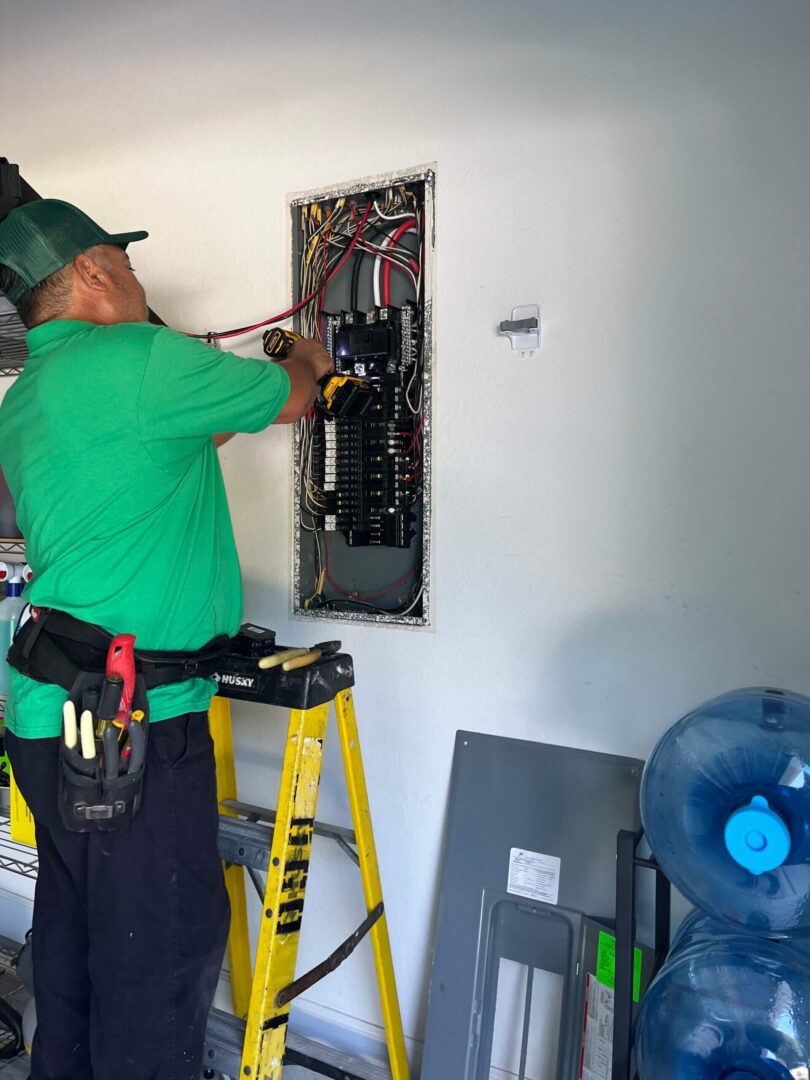
One of the most important parts of any home EV charger installation guide is the electrical panel review. Homeowners often focus on the charging station and overlook the panel, but that is where the job is won or lost.
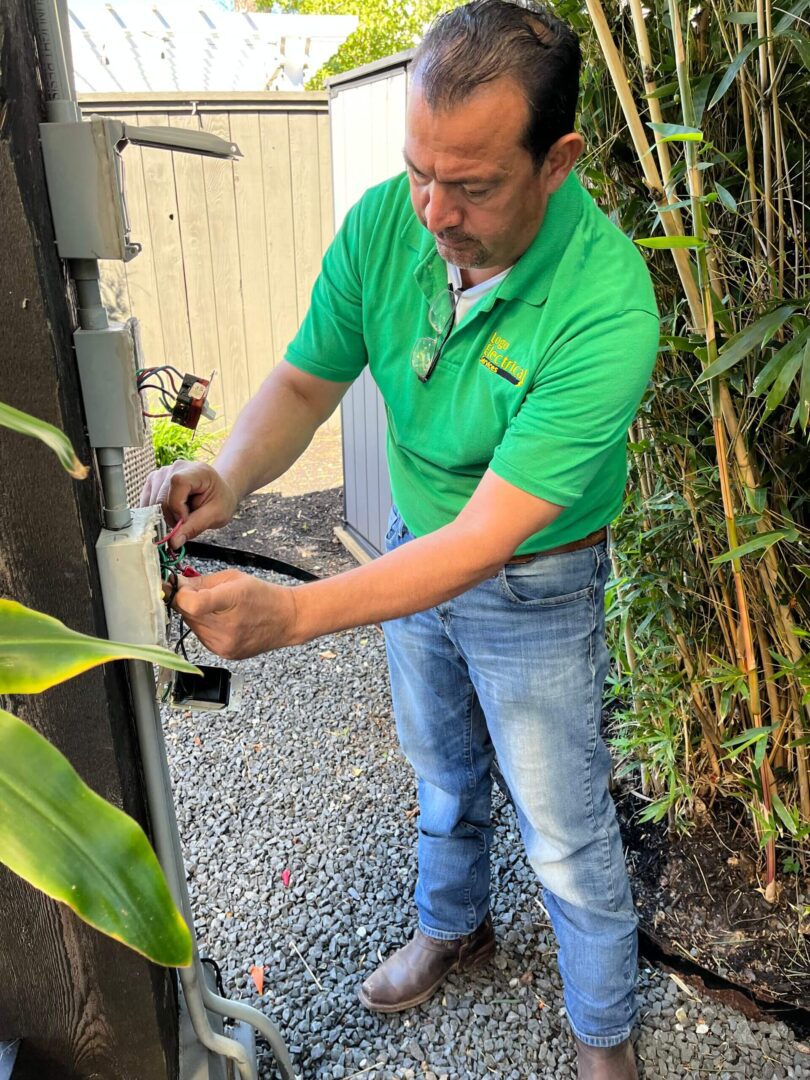
An electrician needs to determine whether your existing panel can safely support a new 240-volt circuit. In some homes, there is enough available capacity and open breaker space, so the installation is straightforward. In others, the panel may be full, undersized, outdated, or already carrying heavy electrical demand from HVAC equipment, ovens, dryers, pool systems, or workshop loads.
This is where experience matters. A licensed electrician should perform a proper load calculation, not just a quick glance at the panel. Some homes need a simple circuit addition. Others may need a subpanel, load management solution, or full panel upgrade. The right answer depends on the numbers, not guesswork.
Choosing the right charger location
Placement affects both convenience and installation cost. Most homeowners prefer a charger in the garage, but not every garage has the panel nearby, and not every family parks in the same spot every day.
A charger mounted close to the electrical panel is often less expensive because it usually requires less wire and labor. But the cheapest location is not always the best location. You also want the cable to reach the vehicle charging port comfortably without stretching across walkways or creating a tripping hazard.
If you park outdoors, weather-rated equipment may be necessary. If you may change vehicles later, it is smart to think about future flexibility now instead of reinstalling later.
Hardwired charger or plug-in model?
This is one of the most common questions homeowners ask. A hardwired charger is permanently connected to the electrical system. A plug-in charger uses a 240-volt receptacle.
Hardwired units are often preferred for a clean, durable installation. They can also be the better fit for higher-amperage charging and may reduce the chance of wear at the plug connection over time. Plug-in units can offer more flexibility if you expect to replace or move the charger later.
The trade-off is that code requirements, manufacturer instructions, and amperage ratings all matter here. What works well in one home may not be the right choice in another. That is why installation should follow both local code and the equipment specifications exactly.
Permits, code compliance, and why they matter
A home EV charger is not a handyman project. It adds a substantial electrical load to your home, and it needs to be installed correctly from the start.
Permits and inspections help protect homeowners. They confirm that the circuit sizing, breaker selection, wiring method, grounding, and equipment installation meet current code requirements. They also matter for insurance, resale, and liability.
In practical terms, code-compliant work reduces the risk of nuisance breaker trips, overheating, damaged equipment, and fire hazards. It also gives you confidence that your charger will perform the way it should under daily use.
For a family-owned contractor with decades of residential experience, this is the standard approach: honest recommendations, licensed work, and no shortcuts hidden behind a lower quote.
How much installation can cost
There is no single flat price for every EV charger installation because homes vary so much. A simple installation with available panel capacity and a short wiring run will cost less than a project involving a long run, drywall access, exterior mounting, or a panel upgrade.
The charger itself is only part of the budget. Labor, permits, wire size, breaker requirements, conduit, mounting conditions, and service upgrades can all affect the final number. If your home needs a panel upgrade to support the charger safely, that changes the scope significantly, but it may also improve the home’s electrical safety and future readiness.
This is one area where transparent pricing matters. Homeowners deserve to know what they are paying for and why. A clear estimate should explain whether the price includes permitting, whether wall repair is included if needed, and whether any panel work is part of the project.
Smart features: worth it or not?
Many modern chargers include app controls, scheduling, energy tracking, and utility-rate integration. These features can be useful, especially if your electric provider offers lower off-peak rates.
That said, not every homeowner needs a charger loaded with extras. If your main goal is dependable overnight charging, a simpler unit may be the better investment. If you like to monitor usage, schedule charging around time-of-use pricing, or manage multiple EVs, smart features may be worth the added cost.
The key is choosing features you will actually use. Paying more for technology that never leaves the default setting does not add much value.
Common issues that come up during installation
Older homes often reveal surprises once the work begins. You may find limited breaker space, aluminum wiring concerns, outdated service equipment, or panel labeling that does not match reality. Detached garages can also add complexity if trenching or underground electrical work is needed.
Another common issue is assuming the charger’s maximum rating is what you need every day. In reality, many households do very well with moderate charging speeds that place less strain on the electrical system and cost less to install.
That is why a site visit matters. A professional evaluation can catch these issues before they become delays or change orders.
When a panel upgrade makes sense
A panel upgrade is not automatically required, but sometimes it is the right long-term move. If your panel is already full, if your service is undersized, or if you are planning other upgrades such as a generator interlock, electric range, hot tub, or additional HVAC equipment, it may be more cost-effective to address capacity now.
This is especially true for homeowners planning to keep the property for years. An upgraded panel can improve safety, support future improvements, and make the home better prepared for a second EV later on.
A practical home EV charger installation guide for homeowners
If you want the process to go smoothly, start with three things: know how much you drive, choose where the vehicle usually parks, and have a licensed electrician evaluate your panel before you buy equipment. That sequence prevents a lot of common mistakes.
It also helps to think one step ahead. If you expect another EV, a remodel, or other electrical additions in the next few years, mention that during the estimate. The best installation is not just about today’s charging needs. It is about building a safe setup that still makes sense later.
Why professional installation is the safer choice
A charger may look simple once it is on the wall, but the electrical work behind it is what matters. Proper circuit design, conductor sizing, breaker matching, equipment mounting, and code compliance are not details to gloss over.
Homeowners in Magnolia and nearby communities are usually looking for the same thing from an electrician: someone who shows up, explains the options clearly, prices the work honestly, and does it right the first time. That is exactly how EV charger installation should be handled.
If you are thinking about charging at home, the best next step is not guessing which charger to buy online. It is having the home evaluated first so the recommendation matches your vehicle, your panel, and the way your family actually lives. A well-planned installation gives you one less thing to think about every time you pull into the driveway.