A level 1 vs level 2 charger decision usually comes down to one question: will your vehicle be ready when you need to leave? For some Magnolia-area homeowners, the outlet that came with the car is enough. For others, especially families with longer commutes or multiple EVs, a professionally installed 240-volt charging circuit quickly becomes a practical daily convenience.
The right choice is not always the fastest charger available. It depends on your driving habits, your vehicle’s charging capability, your home’s electrical capacity, and whether you want a setup that will still serve your household well a few years from now.
Level 1 vs Level 2 Charger: The Main Difference
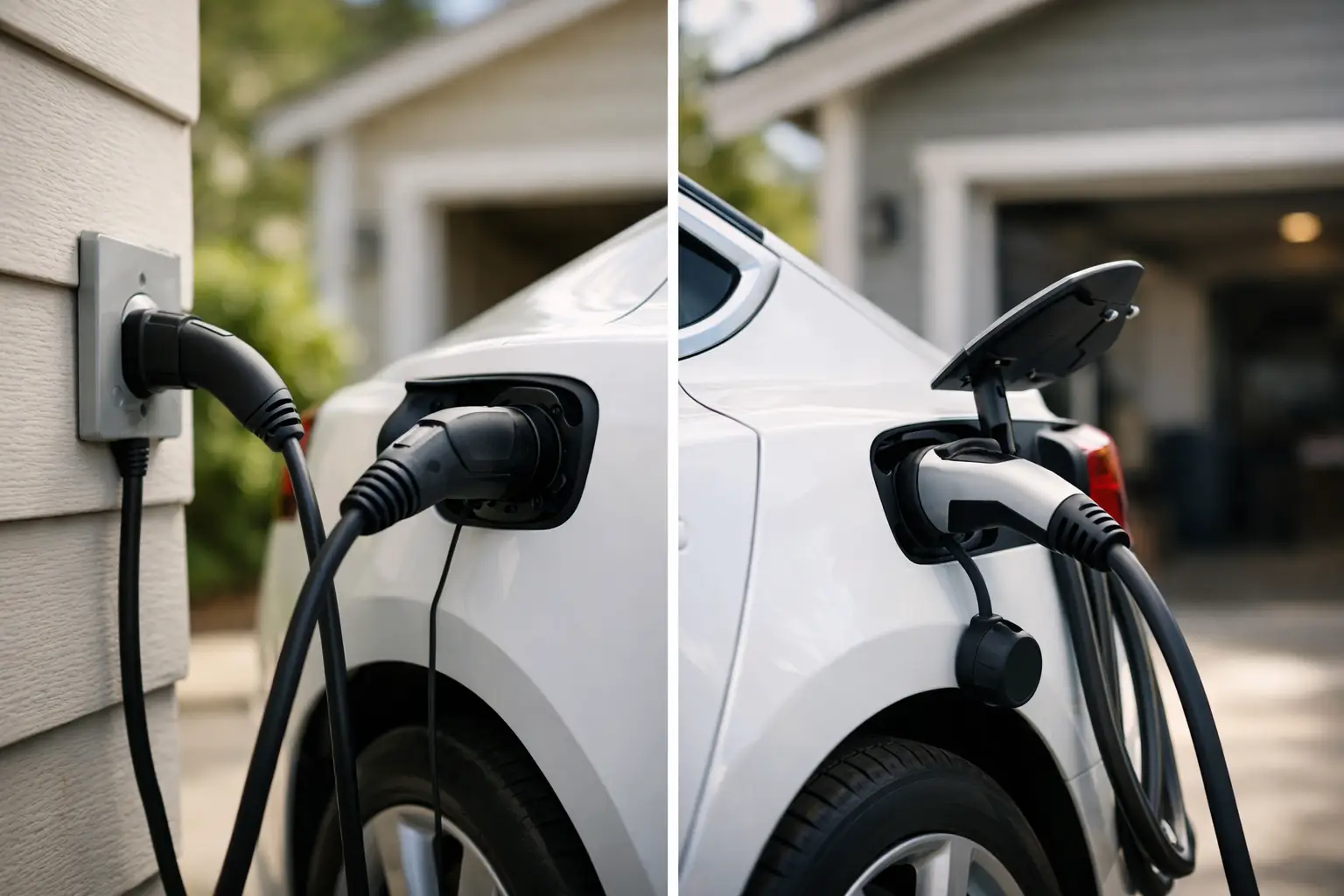
Level 1 charging uses a standard 120-volt household outlet, similar to the outlets used for lamps and small appliances. Most EVs include a portable charging cord that can plug into a properly grounded outlet. This is the simplest way to begin charging at home, but it is also the slowest.
Level 2 charging uses 240 volts, the same type of power used by larger appliances such as an electric dryer or range. It requires a dedicated circuit and EV charging equipment installed by a licensed electrician. Because it delivers more power, it can add substantially more driving range while your vehicle is parked at home.
The equipment mounted on a wall is often called a charger, though the vehicle handles much of the actual battery charging. You may also hear it called EV supply equipment, or EVSE. For homeowners, the key difference is straightforward: Level 1 is a standard-outlet solution, while Level 2 is a dedicated home charging solution built for faster, regular use.
How much faster is Level 2?
A Level 1 setup commonly adds about 3 to 5 miles of range per hour of charging. Charging overnight can work well if you drive modest distances during the day and have plenty of time for the battery to recover.
A Level 2 charger often adds roughly 15 to 40 miles of range per hour, depending on the vehicle, charger output, circuit size, and electrical service. That difference can turn an overnight charge into a few-hour charging session.
Actual results vary. A vehicle with a lower onboard charging limit may not use the full output of a high-powered Level 2 unit. Battery temperature, current state of charge, and the vehicle’s settings can also affect charging speed. A licensed electrician can install the right circuit for your equipment, but the EV itself ultimately determines how much power it can accept.
When a Level 1 Charger Makes Sense
Level 1 charging can be a sensible starting point for homeowners who drive less than their EV can recover overnight. If you typically travel 20 to 40 miles a day, park at home every night, and have a reliable outlet in the garage, it may meet your needs without an immediate electrical upgrade.
It can also be useful as a backup option. Keeping the portable Level 1 cord in the vehicle gives you flexibility when visiting family, staying at a rental property, or charging at a location without dedicated EV equipment.
Still, a standard outlet deserves more attention than many people give it. EV charging places a continuous load on the circuit for hours at a time. Older outlets, loose connections, damaged cords, shared circuits, or improperly grounded wiring can create heat and safety concerns. Extension cords should not be used for routine EV charging unless specifically approved by the vehicle and equipment manufacturers for that purpose.
If your garage outlet is old, frequently trips a breaker, shares power with a freezer or other equipment, or feels warm during use, have it inspected before relying on it for daily charging. A low-cost solution is only a good solution when the wiring supporting it is safe.
When Level 2 Is Worth the Investment
Level 2 charging is usually the better fit for households with longer commutes, larger battery vehicles, or more than one driver depending on the same EV. It is also valuable when your schedule changes often. Instead of planning around a long overnight charge, you can add meaningful range between errands, after work, or before an unexpected trip.
For many homeowners, the convenience is the real benefit. You come home, plug in, and start the next day with the range you need. That routine can reduce dependence on public charging stations and make EV ownership feel much more predictable.
A Level 2 installation is also a forward-looking home upgrade. Even if one EV has modest charging needs today, future vehicles may have larger batteries or your household may add a second plug-in vehicle. Installing an appropriately sized circuit now can help avoid repeating work later, provided the electrical panel and service capacity support the plan.
What a Safe Level 2 Installation Requires
A proper EV charger installation is more than mounting a device near the garage door. The circuit must be sized for the charger’s continuous electrical load, the wiring must be rated and installed correctly, and the electrical panel must have sufficient capacity. Local permitting and code requirements may also apply.
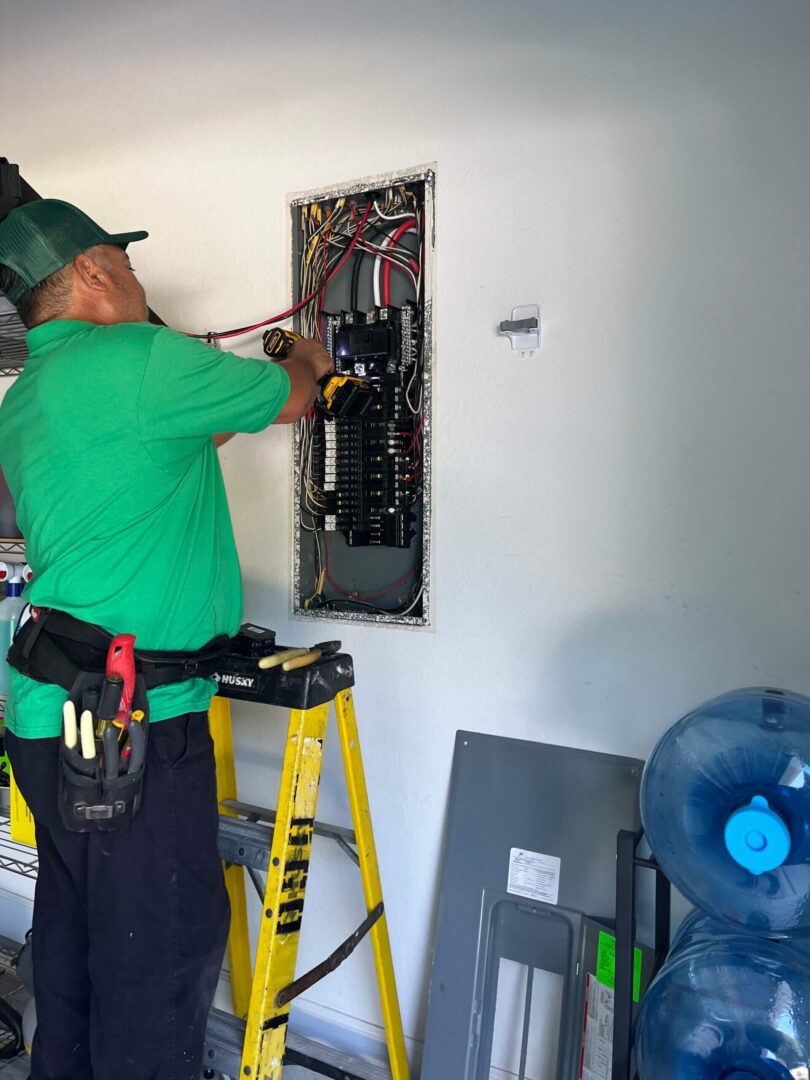
An electrician should begin by evaluating your existing panel, available breaker spaces, service capacity, and the distance from the panel to the charging location. A longer run may require different wire sizing and can affect installation cost. In older homes, the panel may be full or the service may already be carrying significant loads from air conditioning, electric appliances, pool equipment, or a generator system.
This evaluation is especially important in Texas, where high summer cooling demands can place a heavy load on a home’s electrical service. Adding EV charging without considering the full load calculation can lead to nuisance breaker trips, equipment limitations, or the need for a later panel upgrade.
Some Level 2 units plug into a 240-volt receptacle, while others are hardwired directly to the circuit. A receptacle can offer flexibility if you may replace or relocate the charger. Hardwiring can be a clean, durable choice for higher-output equipment and avoids the additional connection point of a plug and outlet. The best approach depends on the charger, location, manufacturer instructions, and your plans for the space.
Cost: Looking Beyond the Charger Price
Level 1 costs very little to begin if your existing outlet and circuit are in good condition. The portable cord may have come with your vehicle, and the electricity used is simply added to your home utility bill.
Level 2 equipment and installation require a larger upfront investment. Costs can vary based on charger output, the distance to the electrical panel, whether trenching or wall repairs are needed, and whether your panel needs upgrades. A simple garage installation is different from running power to a detached garage, driveway, or carport.
It helps to view the cost in terms of daily use and long-term safety, not just equipment price. A properly installed dedicated circuit protects your electrical system, supports reliable charging, and can add appeal for future buyers who own or plan to buy an EV.
Before choosing a charger, check your vehicle’s maximum Level 2 charging rate. Buying a unit capable of far more power than your vehicle can accept may not improve charging speed. On the other hand, choosing a unit and circuit with reasonable room for future needs can be worthwhile when the installation is being planned from the start.
Choosing the Right Setup for Your Home
Start with your normal daily mileage and your available charging time. If your EV can recover that distance overnight with Level 1 charging, and the outlet is on a safe, suitable circuit, there may be no reason to rush into an upgrade.
If you regularly drive beyond that range, need faster turnaround between trips, own a larger EV, or expect a second electric vehicle, Level 2 is typically the more practical choice. The goal is not to install the biggest charger possible. It is to install a dependable charging setup that matches your vehicle, your home, and your routine.
For homeowners considering a Level 2 charger, Logo Electrical Services can evaluate the panel, circuit capacity, charger location, and installation requirements before work begins. Clear recommendations and code-compliant workmanship matter because EV charging is not an appliance you use once in a while – it is part of your home’s electrical system every day.
A quick electrical assessment before purchasing equipment can save money, prevent installation surprises, and give you confidence that each charge starts with a safe connection.