Do I Need A Generator?
What to consider before investing in backup power for your home
If you’ve ever lost power during a storm, you know how quickly things can become stressful. From spoiled food and uncomfortable temperatures to safety concerns and lost productivity, outages can disrupt your entire household. A backup generator gives you peace of mind by keeping your home powered when the grid goes down, but is it the right choice for you?




Signs You Might Need a Generator

-
What Happens Without Backup Power?
When the power goes out, it’s not just inconvenient—it can quickly become disruptive:
- Your home can lose heating or cooling within minutes
- Refrigerated and frozen food can spoil in as little as 4–24 hours
- Sump pumps stop working, increasing the risk of water damage
- Security systems, garage doors, and lighting may stop functioning
- Devices lose power, cutting off communication and updates
For many homeowners, outages create a ripple effect that affects everything from daily routines to long-term property protection.
-
You may want to consider installing a generator if:
- You experience frequent or extended outages, especially during storms
- Your home depends on well water, sump pumps, or electric-only systems
- You work from home and can’t afford downtime or lost connectivity
- You have a finished basement or areas prone to flooding without power
- You store a large amount of food or rely heavily on refrigeration
- Someone in your home depends on powered medical equipment
- You want to avoid the hassle of scrambling during emergencies
Even if outages only happen a few times a year, the impact can be significant enough to justify having a backup plan in place.
-
Why Generators Matter in the Houston Area
Living in Southeast Texas means dealing with more than just the occasional outage. Between hurricanes, heavy rain, flooding, and ongoing power grid concerns, losing power isn’t a rare event—it’s something many homeowners experience multiple times a year.
- Hurricane season can bring extended outages lasting days or even weeks
- Severe thunderstorms and lightning regularly knock out power across neighborhoods
- Heavy rainfall and flooding increase the need for sump pumps and critical systems to stay running
- Texas power grid strain during extreme heat or cold can lead to unexpected outages
- High humidity and heat make losing A/C more than uncomfortable—it can quickly become unsafe
For homeowners in The Woodlands, Magnolia, Tomball, and surrounding areas, having a reliable backup power solution isn’t just a convenience—it’s a way to stay prepared for the realities of our local climate.
Many of our customers start considering a generator after one bad outage—but the best time to plan is before the next storm hits.
-
Not Sure If You Need One? Let’s Talk.
Every home is different—and the right solution starts with understanding your needs.
👉 Request a free consultation today or call (281) 440-3300 to speak with a local electrician about generator options for your home.

We handle everything, start to finish — so you don’t end up in the dark.
Cost vs. Convenience: What Matters Most?
-
What Do You Need?
Choosing a generator often comes down to balancing cost and convenience.
Not every homeowner needs the same level of backup power, and the right solution depends on how you want to handle outages when they happen.Some people are comfortable setting things up manually to save on upfront costs, while others prefer a fully automatic system that works without any effort at all.
-
Portable Generators (Lower Cost, More Hands-On)
Portable generators are the most budget-friendly option and work well for basic backup needs—but they do require effort every time the power goes out.
- Lower upfront cost
- Powers essential items only (fridge, lights, outlets)
- Requires manual setup and startup
- Typically runs on gasoline
- May require extension cords or a transfer switch
💡 Best for homeowners who don’t mind a little extra work to save money.
-
Standby Generators (Higher Cost, Maximum Convenience)
Standby generators are permanently installed and designed to take over automatically when your power goes out—no action needed from you.
- Fully automatic operation
- Can power your entire home or major systems
- Runs on natural gas or propane
- Seamless transition during outages
- Long-term, reliable solution
💡 Best for homeowners who want peace of mind and zero hassle during outages.
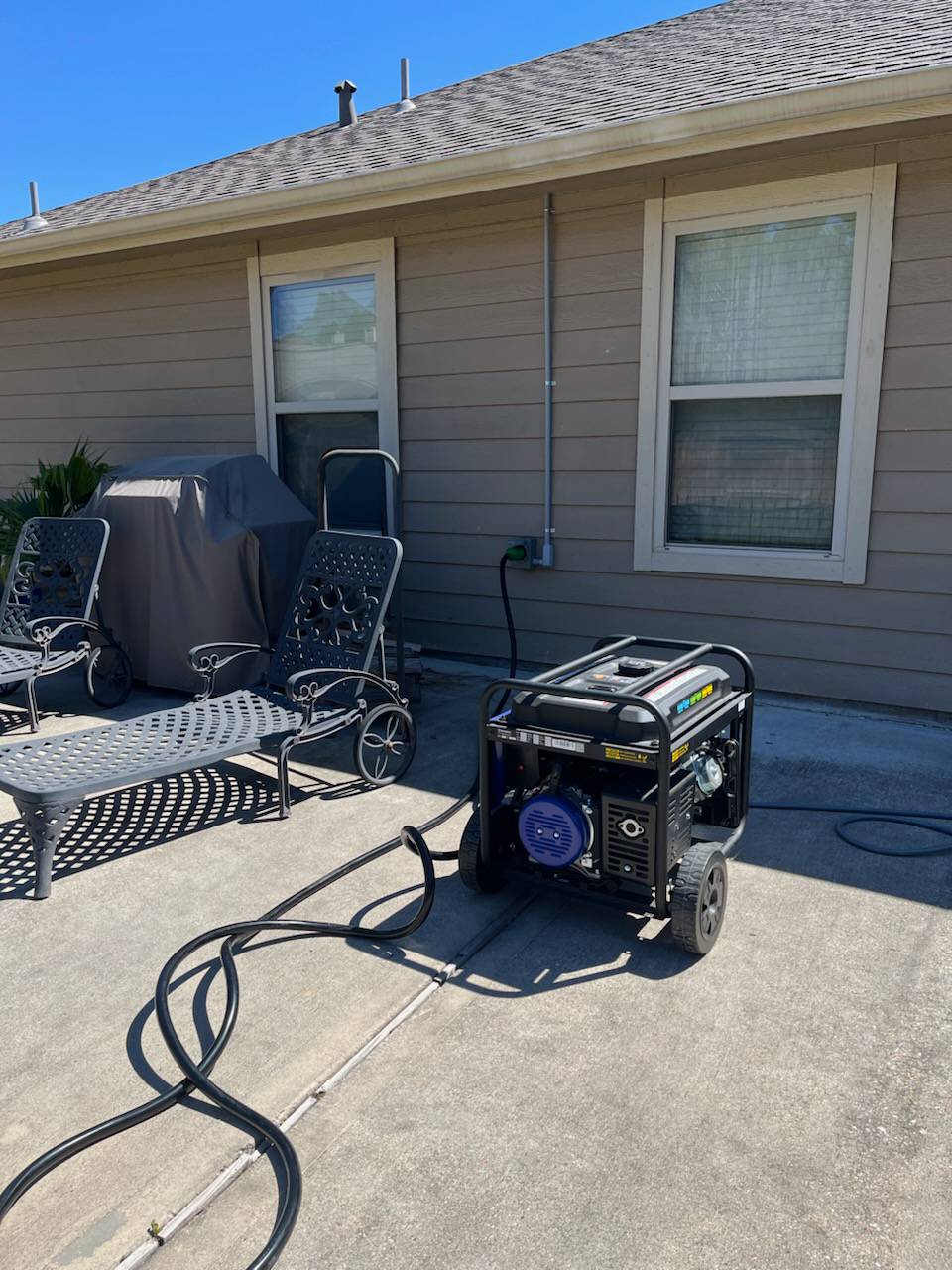
WHEN THE NEXT HOUSTON STORM HITS, WILL YOU HAVE POWER?
Which Generator Is Right for Your Home?

-
What Are Your Needs?
Choosing the right generator comes down to how you want to handle power outages and what level of convenience fits your lifestyle. Some homeowners are perfectly comfortable setting up a portable generator when needed to keep a few essentials running, while others prefer a fully automatic standby system that powers their home instantly without any effort. The right choice depends on how often you lose power, how long outages typically last, and how much disruption you’re willing to deal with when they happen.
- Choose a portable generator if you want a lower upfront cost and don’t mind manual setup during outages
- Choose a standby generator if you want automatic, whole-home or large-system coverage with zero hassle
- Portable systems are great for short-term or occasional outages, while standby systems are better for frequent or extended outages
- If you rely on things like well water, HVAC, or medical equipment, a standby generator is often the safer long-term solution
There’s no one-size-fits-all answer, just the right setup for your home and your peace of mind
-
Let’s Find the Right Generator for Your Home
Not sure which option makes the most sense? That’s what we’re here for.
👉 Request your free generator consultation today or call (281) 440-3300 to speak with a local electrician and get expert guidance tailored to your home.
Book an Appointment
Quick Response Guarantee: We aim to respond to all service requests within 24 hours! Fully licensed, bonded and insured. Texas License #23582. Not Ready To Schedule Yet? Give us a call at (281)-440-3300
Our Special Coupon Offers
At Logo Electrical Services, we appreciate our customers and offer great coupon deals to help you save on your next project. Check out our current promotions to enjoy discounts while enhancing your home!